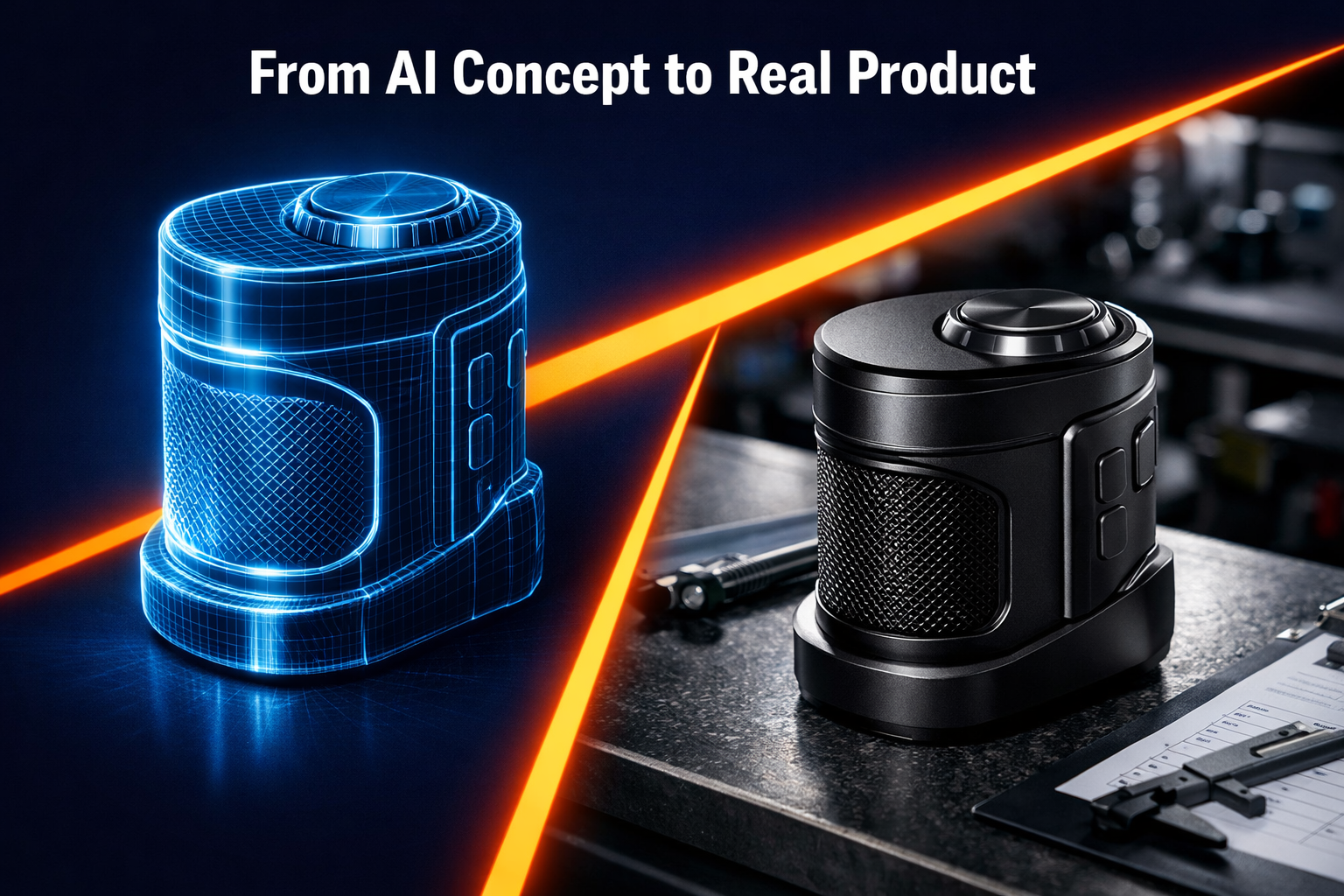
AI-Powered Product Development: What You Must Know Before You Build
AI compresses ideation - but only a rigorous process can turn a stunning render into a shippable product.
In Brief
AI tools have genuinely transformed the early stages of physical product development - generating stunning 3D concepts, exploring form-factor variations, and compressing weeks of design work into days. But a beautiful AI render is not a product. It still needs to survive drop tests, fit within manufacturable tolerances, and work inside a viable cost structure.
The entrepreneurs who succeed are the ones who use AI to move fast in ideation, then plug into a rigorous engineering and manufacturing process before spending serious money. ATI bridges that gap - grounding AI-generated dreams in the physics and economics of making real things.
Sarah had been sitting on her idea for three years. A smart home device that would change the way families interact with their living spaces. When a friend showed her a demo of an AI tool that could generate a 3D product concept in under ten minutes, something clicked. Within a week she had a stunning render, a materials list, and a pitch deck that made investors lean forward in their chairs.
The excitement was electric. She showed the concept to everyone - friends, accelerator mentors, potential customers. All of them nodded. She started talking to manufacturers. She commissioned branding. She was building.
Then the first engineering quote landed. Then the second. Then the compliance officer explained what certifications her device would need for the European market. The vision was real - but the foundation beneath it was sand. But before going further - there's a critical step most entrepreneurs skip.
Remember: AI-Powered Product Development Is Not a Shortcut to a Finished Product
Let's be clear: AI tools have genuinely transformed physical product development. What used to take weeks of back-and-forth with industrial designers can now be prototyped visually in days. Generative design tools can explore hundreds of form-factor variations overnight. That is real, and it matters.
But here is ATI's contrarian take - and it comes from years of shepherding physical products from sketch to serial production in China: AI compresses the creative phase, but it cannot compress reality. A beautiful AI-rendered concept still needs to survive a drop test. It still needs to be manufacturable at the tolerances your factory can hold. It still needs to fit inside a cost structure that allows you to make a margin.
The entrepreneurs who get into trouble are not the ones who use AI - it's the ones who mistake AI output for product validation. ATI works with founders who arrive with stunning visuals and no BOM. Our job, before anything else, is to ground the dream in the physics and economics of making things.
Busting the Myth: The Check That Must Come Before Investing in AI-Powered Product Development
The myth is seductive: AI means I can skip the slow, expensive early steps. ATI has seen this play out enough times to know exactly where it breaks.
Here is what ATI does before a single manufacturing dollar is committed:
- Feasibility audit of the AI-generated concept - Does the geometry allow for standard tooling? Are the wall thicknesses manufacturable in the chosen material?
- Component and supply chain mapping - Where does every sub-component come from? What are the lead times? Are there single-source risks?
- Regulatory landscape review - CE, FCC, RoHS, REACH - which apply, and how do they affect the design?
- Real cost modeling - Not the AI's estimated BOM. An actual landed-cost model including tooling amortization, freight, and duties.
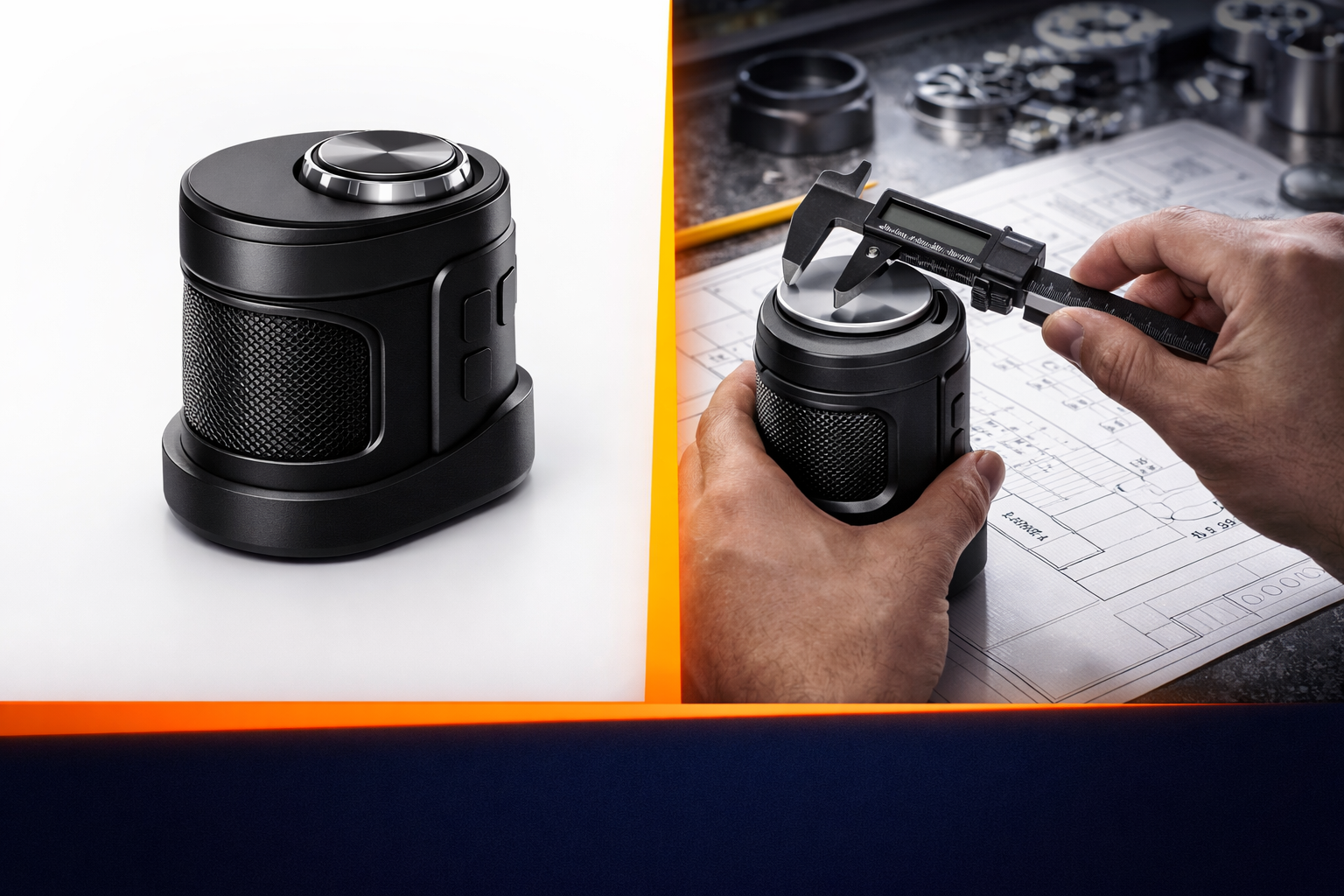
Once those boxes are checked, ATI follows a structured development path:
- Translate the AI concept into engineering-grade CAD with DFM (Design for Manufacturability) principles built in
- Build a functional prototype - not a render, a real object you can hold and break
- Run a supplier qualification process across ATI's vetted China manufacturing network
- Execute a pilot production run with full QC documentation
- Lock the product for serial production with a process control plan
This is AI-powered product development the way it actually works - AI at the front to move fast, ATI's process in the middle to make it real.

Tip From the Experts
An AI can design the dream; only a process can protect the investment. Use AI to compress ideation - use ATI to compress the path from prototype to production.
Key Takeaways
AI-Accelerated Ideation
Compress weeks of concept exploration into days with generative design tools.
DFM Engineering
Translate AI concepts into manufacturing-ready CAD with real-world tolerances.
Manufacturing Bridge
ATI's vetted China network turns prototypes into serial production at repeatable quality.
Feasibility Audit
Validate geometry, materials, and tooling before committing manufacturing dollars.
Regulatory Compliance
CE, FCC, RoHS, REACH - work through the certification landscape before it derails your timeline.
Real Cost Modeling
Actual landed-cost analysis including tooling amortization, freight, and duties.
Frequently Asked Questions
How much does AI-powered product development cost with ATI?
Every product is different, but a typical engagement - from feasibility audit through first functional prototype - runs between $15,000 and $60,000 USD, depending on complexity, number of components, and required certifications. ATI provides a fixed-scope proposal after the initial consultation so there are no surprises.
How long does the process take from AI concept to serial production?
Realistically, 9 to 18 months for a new physical product with custom tooling. AI-powered product development can compress the ideation and initial design phase by 40 - 60%, but tooling lead times, regulatory testing, and pilot production have fixed durations that no software can shrink.
What exactly is included in ATI's development process?
ATI covers the full process: concept validation and feasibility, engineering CAD and DFM, supplier identification and qualification in China, prototype production, regulatory compliance support, pilot run supervision, and handover to serial production. The client always owns all IP and tooling.
When is ATI's approach not the right fit?
If you have a purely digital product, a product that can be produced with off-the-shelf components and no custom tooling, or a very early-stage concept that has not yet been validated by any potential customers - ATI may not be the right partner at this moment. We're built for entrepreneurs who are ready to make something physical, not just imagine it.
What does ATI do differently from other product development firms?
Most development firms hand you a design file and wish you luck. ATI's differentiator is the manufacturing bridge: we have active supplier relationships in China, we run the pilot production ourselves, and we don't consider a project finished until the client's product is rolling off a line at a repeatable cost and quality level. AI-powered product development only creates value when the back end of the process is as strong as the front.