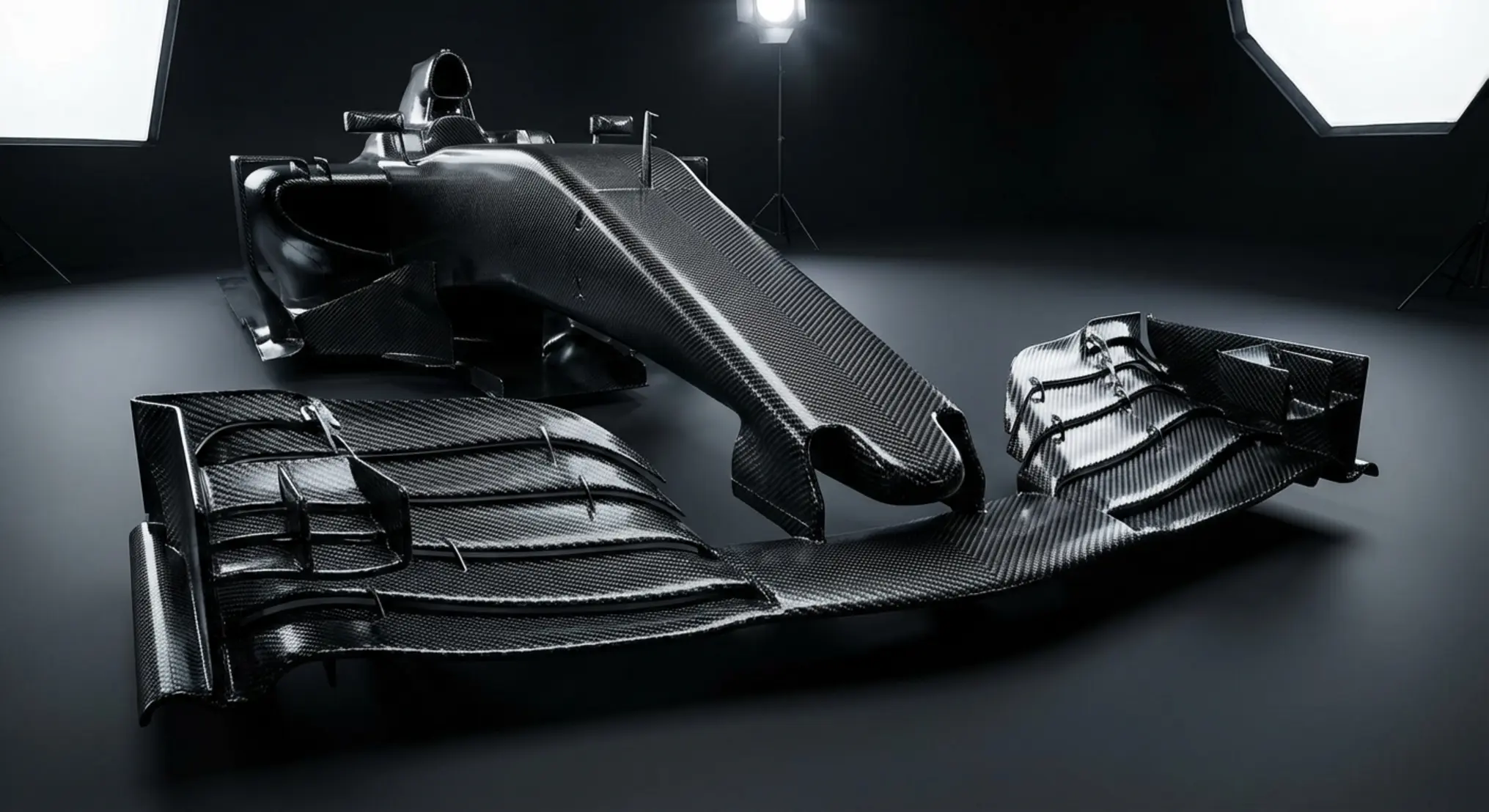
Carbon Fiber in Product Development: When Is It Really Necessary?
A professional deep explore when carbon fiber is an engineering necessity and when it is just a marketing gimmick.
In Brief
Carbon fiber is truly necessary when the product being developed demands an extreme strength-to-weight ratio that traditional materials like hardened aluminum or steel simply cannot provide. These are cases where every gram directly impacts product performance, such as in aerospace and defense, professional racing vehicles, competitive sports equipment, and advanced drone systems. In these situations, the high financial investment in the material and complex manufacturing methods is justified by the exceptional performance the material delivers to the entire system.
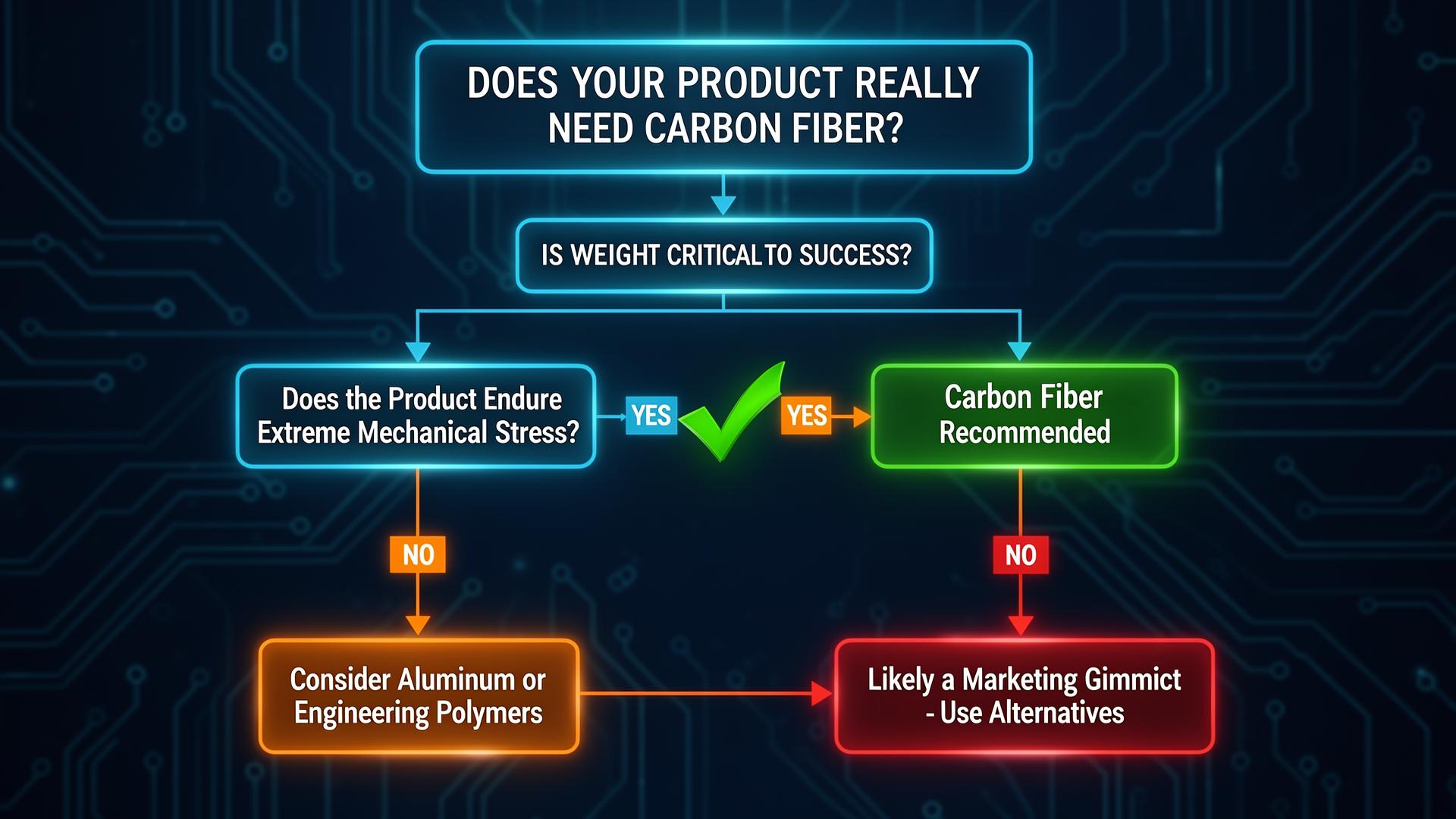
On the other hand, carbon fiber is often used as nothing more than a marketing and design gimmick. When a product does not experience significant mechanical stress, or when its overall weight is not a critical factor for commercial success, adding a carbon layer serves only to give it an advanced, high-tech appearance. In these cases, from an engineering and business perspective, it is frequently an unnecessary expense that can be avoided through smarter planning, proper industrial design, and selecting alternative polymeric or metallic materials at significantly lower cost.
Hello everyone, this is Tsachi from ATI. Over more than two decades of guiding entrepreneurs and managing complex technological projects, I have encountered quite a few requests to incorporate advanced materials into new products. One of the most sought-after materials is undoubtedly carbon fiber. The black woven, glossy appearance immediately conveys innovation, speed, and luxury. Many entrepreneurs assume that adding this material to their product will automatically upgrade it and turn it into a coveted premium product. But is this always the right decision from an economic and engineering standpoint? In this article, I will give you a professional and in-depth overview of the world of composite materials. Together, we will review the true advantages of the material, understand when it constitutes a genuine engineering necessity, and when it is merely a design addition that can inflate development and manufacturing costs without real justification.
The Black of the Composite Materials Industry Magic
When we examine the modern world of materials engineering, it is impossible to ignore the prominent presence of the composite materials family, led by carbon fiber. This is a material that is completely changing the rules of the game in entire industries. At the chemical and physical level, a carbon fiber strand is composed of very long chains of carbon atoms bonded together in an incredibly dense and strong crystalline structure. When thousands of these thin fibers are woven together into sheets or fabrics, and then combined with a binding material such as epoxy resin or another advanced polymer, a material with extraordinary and remarkable properties is obtained.
As a product development company that supports dozens of projects and manufacturing teams around the world, we are frequently asked whether it is worthwhile to incorporate this material in the early stages of system specification. The answer lies in a deep understanding of the physical and mechanical properties of the material versus the exact requirements of the project and the budget available to the entrepreneur.

The Key Advantage: Strength-to-Weight Ratio
The primary and most important reason engineers choose to use this material is its incredible strength-to-weight ratio. This metric (also known in academic engineering as Specific Strength) numerically describes how much load or stress the material can bear relative to its own weight. This is the winning formula of the aerospace and competitive automotive industries.
To put things in proper perspective, it is important to know that carbon fiber is five times stronger than steel yet dramatically lighter. It is also lighter than advanced aerospace aluminum while offering significantly higher stiffness under tensile loads. This unique property allows development engineers to create thin, aerodynamic, and exceptionally lightweight components capable of withstanding extreme loads of vibration, pressure, and tension without permanent deformation or fracture. This is a genuine breakthrough for industries where every gram of weight translates directly into energy cost or competitive disadvantage.
Common Methods for Carbon Fiber Products Manufacturing
When we approach the stage of manufacturing products that incorporate advanced materials of this type, it is important to understand that the workflow is fundamentally different from standard plastic injection molding or classic CNC machining of metals. The process requires specific expertise, careful attention to detail, and highly controlled manufacturing conditions to prevent future product failures.
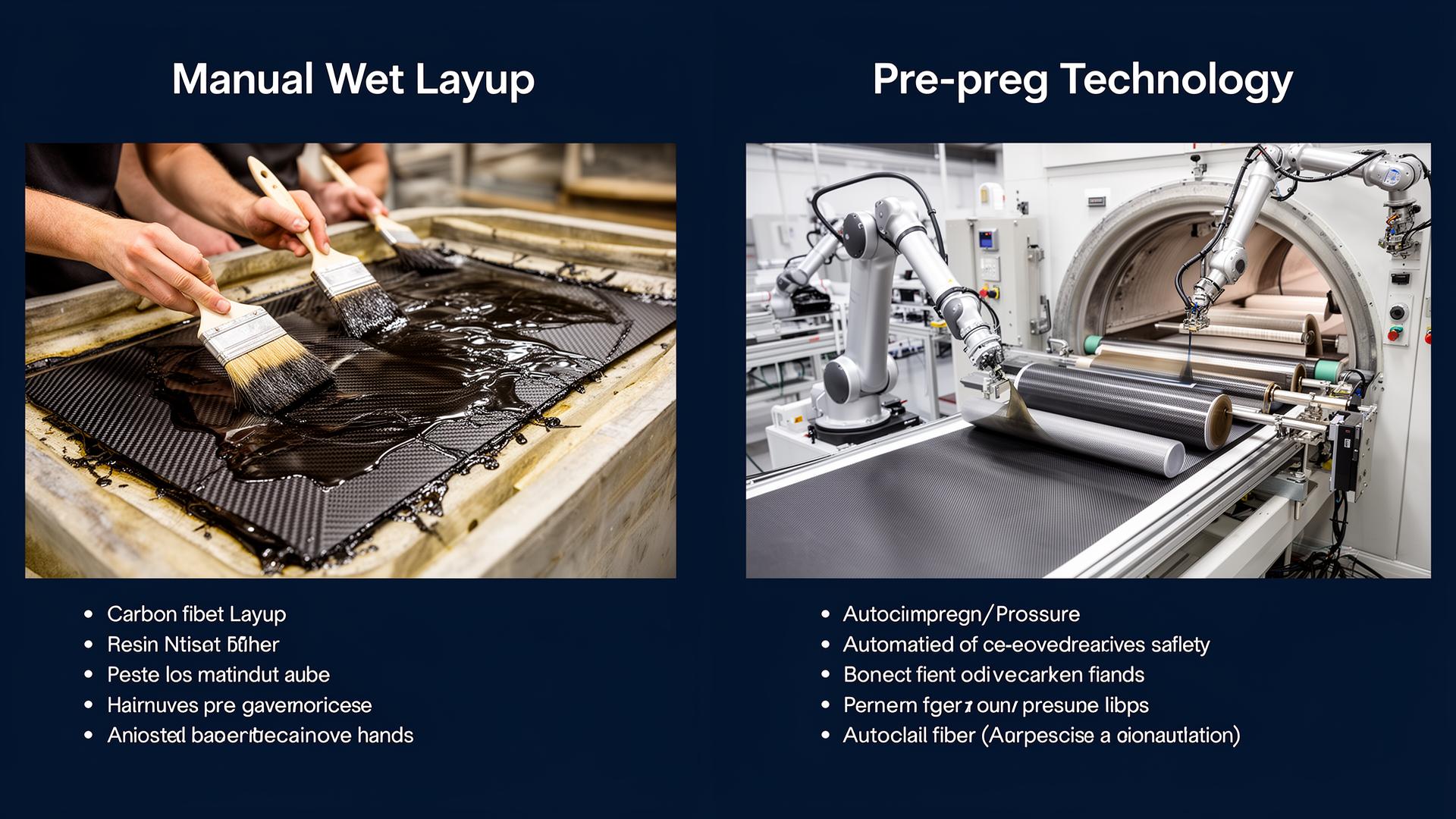
Traditional Manual Layup (Wet Layup)
This is the most basic and well-known method, commonly used in small workshops and projects with lower budgets. In this method, professionals place dry carbon fiber sheets inside a purpose-built mold. After laying the sheets, liquid epoxy resin is applied manually using special brushes or rollers. The next critical step involves wrapping the entire mold in an airtight bag and vacuuming out the air. Atmospheric pressure presses the material firmly against the mold and helps remove trapped air bubbles that could weaken the part.
The notable advantage of this method is relatively low setup cost and high operational flexibility for creating prototypes or small production runs. The significant disadvantage is that it is very difficult to control the precise and optimal ratio between fiber quantity and liquid resin at the manual level. Excess resin leads to a heavier and more brittle part, which compromises performance compared to more advanced and precise industrial methods.
Pre-impregnated Sheet Technology (Pre-preg)
For engineering applications requiring maximum precision, minimum weight, and optimal performance without compromise, the right choice is pre-preg technology. In this advanced method, carbon sheets arrive from the factory already impregnated with a calculated, precise, and perfect amount of resin. These special sheets are stored in deep freeze to prevent the resin from beginning the chemical curing process prematurely.
During the manufacturing process, workers place the sheets in the mold in a controlled manner and then insert the entire mold into an autoclave, which is essentially a computer-controlled industrial pressure oven. The immense heat and pressure inside the oven cause the resin to flow uniformly and perfectly between all the fibers and then cure to form a single strong mass. The final result is a component with a perfect fiber-to-resin ratio, free of air bubbles, with minimum weight and maximum achievable strength from the material.
When Is Using Carbon Fiber a True Engineering ? Necessity
Incorporating composite materials into a new project must be backed by justified engineering and economic reasoning. Since raw material costs and manufacturing process costs are significantly higher than familiar market alternatives, we as engineers must ensure that the additional investment will indeed pay for itself in the final product's performance. Here are several prominent cases where usage is considered absolutely essential:
- Aerospace, Defense, and Security: In these fields, every additional kilogram in the system requires significantly more fuel burn or reduces flight range. Weight reduction is a critical requirement for system success and meeting tender requirements.
- Competitive Sports Vehicles: In Formula 1 racing or professional road cycling, the high stiffness of the material enables more efficient power transfer from the engine or rider to the road, and the lightweight dramatically improves acceleration times and braking capabilities.
- Drones and Advanced Robotic Systems: Exceptionally lightweight chassis components allow a drone to stay airborne longer thanks to battery savings, or alternatively carry heavier dedicated payloads and cameras.
- Medical Equipment and Prosthetics: In the medical field, the material is used to create lightweight and strong prosthetics that better simulate natural bones, as well as components for X-ray imaging devices since the material is completely transparent to X-rays and does not interfere with imaging.
When Is It Just a Marketing ? Gimmick
In very many cases, we encounter entrepreneurs and companies demanding to incorporate the black, woven, and distinctive appearance solely for visual impact and overall impression. In product design, there is a natural tendency to use materials that convey to the end customer a sense of technological advancement, expertise, and a luxury product. However, if we are talking about developing a phone case, a desktop monitor frame, or a decorative furniture item that does not bear heavy loads in any way, then from an objective engineering standpoint this is an unnecessary and expensive addition.
In these exact situations, the material serves as a pure marketing gimmick. We frequently see manufacturers who choose to use simple, inexpensive plastic and stick a single thin layer of carbon fiber on top just to achieve the desired appearance on the product's exterior. In even cheaper cases, they use a printed plastic sticker that mimics carbon texture. If the goal is purely psychological and aesthetic, it is important to consciously acknowledge this and seriously consider whether the high cost justifies the expected marketing benefit at the point of sale.
The Importance of Proper From Early Development Stages Planning
Every professional and responsible process of developing an idea into a product must include, from its earliest stages, a phase of performance research and careful material selection. Choosing carbon fiber is not a trivial decision - it affects the entire planning and manufacturing chain horizontally. From an engineering standpoint, you cannot simply take a 3D drawing originally designed for aluminum CNC machining and change the material definition in the computer to carbon. An entirely new design is required.
The reason is that the composite material behaves in a distinctly anisotropic manner. This means that the mechanical properties and strength of the material change completely depending on the direction in which the fibers were laid in the mold. If the design engineer does not precisely analyze the expected load directions and explicitly define at what angle to lay each and every layer of fabric, the part that is created may fail and break under operating pressure, despite using such advanced and expensive raw material. Therefore, working with these materials requires specific expertise in finite element analysis and dedicated design for the world of composite materials.
Professional Material Properties Comparison
To help you make the most informed decision for your next project, we have prepared a professional comparison table between the main alternatives available during material specification:
| Material Type | Estimated Specific Weight | Tensile Strength | Average Manufacturing and Raw Material Cost | Engineering Design Complexity |
|---|---|---|---|---|
| Carbon Fiber with Epoxy | Very Low | Extremely High | Very High | Very High |
| Aerospace-grade Aluminum | Low | High | Moderate | Moderate |
| Hardened Industrial Steel | Significantly High | Very High | Low to Moderate | Low |
| Glass Fiber Reinforced Plastic (Fiberglass) | Medium-Plus | Moderately Good | Low and Competitive | Moderate |
As can be clearly seen and analyzed from the table data, there is no single universal magic solution in the world of engineering that fits all projects across the board. Every entrepreneur and company must think deeply about the true needs of their target audience, the final intended use of the product, and of course the budget at their disposal, all before making the final decision on raw material selection and manufacturing methods.

Tip From the Experts
Before you make a final decision and commit to expensive carbon fiber manufacturing, always verify with the engineering team whether similar and relevant results for the project can be achieved using advanced engineering polymers or new aluminum alloys. In many cases, using topological optimization techniques in computer-aided design and removing unnecessary material from a standard aluminum part will provide you with the required weight reduction at a quarter of the financial cost of manufacturing dedicated molds for composite materials.
Key Takeaways
Strength-to-Weight Ratio
Carbon fiber is five times stronger than steel yet dramatically lighter - the key advantage driving its use in high-performance applications.
Manufacturing Methods
From manual wet layup to advanced pre-preg autoclave technology - each method offers different quality and cost trade-offs.
Real Engineering Need
Aerospace, racing, drones, and medical devices are fields where carbon fiber delivers genuine and irreplaceable performance benefits.
Marketing Gimmick Warning
When a product faces no significant mechanical stress, carbon fiber often serves as an expensive cosmetic addition with no real benefit.
Anisotropic Design Challenge
Carbon fiber strength varies by fiber direction - requiring specialized finite element analysis and layup planning by experts.
Material Selection Matters
Always compare carbon fiber against aluminum alloys, engineering polymers, and fiberglass before committing to the most expensive option.
Frequently Asked Questions
What is the main difference between carbon fiber and fiberglass?
The core difference lies in the type of fiber used. While carbon fiber is made of carbon atoms that provide immense strength and minimal weight, fiberglass is made of thin glass fibers. Fiberglass is significantly cheaper to manufacture, easy to work with, and provides good durability, but it is considerably heavier than carbon fiber and less stiff. Therefore, in projects where the budget is limited and weight is not a critical factor, fiberglass is often the preferred choice.
Can carbon fiber components be recycled after the product reaches end of life?
Recycling composite materials is a very complex engineering and environmental challenge today. Unlike metals that can simply be melted and recast, the polymeric resin binding the fibers cures irreversibly through a chemical process. In recent years, advanced chemical and thermal methods have been developed to break down the resin and extract the fibers for reuse, but the process is still very expensive, requires significant energy, and the recycled fibers typically lose some of their original strength properties and are used for simpler products.
Why are quality carbon products so expensive compared to plastic or metal?
The high cost stems from a combination of several key factors. First, the process of manufacturing the basic raw material and spinning the carbon threads requires extreme temperatures and enormous energy. Second, manufacturing the final product requires skilled manual labor, very expensive molds that can withstand pressure and heat, and extended manufacturing time in industrial pressure ovens. Unlike plastic injection molding that can produce thousands of parts per day, manufacturing a complex carbon component can take several hours or even days.
Can carbon fiber parts rust or corrode over time?
No, carbon fibers do not contain iron and therefore cannot rust in any form, making them excellent for use in marine or wet environments. However, the epoxy resin that wraps the fibers may be sensitive to prolonged exposure to direct sunlight and may yellow or deteriorate over the years if not coated with a quality UV-filtering protective layer. Additionally, direct contact between carbon fiber and aluminum parts in a salty environment can create galvanic corrosion in the metal component.
What happens when a carbon fiber part breaks from a strong impact? Can it be repaired?
When a composite material fails, it usually does not bend like metal but rather cracks or breaks sharply with internal layer separation. Certain damage in carbon structures can be repaired by sanding the damaged area and bonding new carbon layers with dedicated resin. This is work for professionals only, as the repair must restore the original structural strength and not just the external appearance. In safety-critical parts such as bicycle frames or aerospace components, complete replacement is usually preferred for safety reasons.
How can I tell as a private individual whether a product I bought contains real carbon fiber or a cheap imitation?
The simplest way is to look closely at the texture, especially the light reflection. In real carbon fiber, you can see three-dimensional depth of the warp and weft that make up the fabric, and light reflects differently from each fiber when moving the part. Cheap plastic stickers usually look flat, without depth, and without varying light reflection. Additionally, real carbon parts will be unusually light relative to their size and will produce a sharp, muted sound - almost like ceramic - when lightly tapped with a coin.