
Electroplating: Turning Plastic Into Chrome
A multi-step chemical and electrical process that bonds a thin metal layer to plastic - delivering a premium metallic look with superior durability.
In Brief
Electroplating on plastic (also known as Plating on Plastic or POP) is a multi-step process combining chemistry and electricity to bond a thin layer of metal - typically chrome, nickel, or copper - onto a plastic substrate. Since plastic is not naturally conductive, the process requires careful chemical surface preparation to make it conductive before the actual electroplating takes place in dedicated baths.
The end result is a lightweight, easy-to-manufacture plastic part with a strong metallic shell. This shell not only upgrades the product's appearance and gives it a premium look of real metal, but also adds significant resistance to abrasion, scratches, chemicals, and corrosion. This solution is widely used in the automotive, consumer electronics, and sanitary fixture industries.
In the world of development and manufacturing, plastic is a wonderful raw material. It is lightweight, inexpensive for mass production, and can be shaped into almost any form imaginable. However, we often need to give our product a luxurious, metallic, shiny, and more durable appearance than bare plastic. This is exactly where one of the most fascinating processes in materials engineering comes in - electroplating on plastic.
This process allows us to take a simple plastic component and give it a stunning chrome finish, while significantly improving its mechanical properties. As product development experts, we see how the combination of plastic flexibility and metallic appearance opens endless doors for entrepreneurs and designers - from manufacturing grilles for luxury vehicles to designer faucets for bathrooms.
What Is on Plastic? Electroplating
Traditionally, electroplating was applied to other metals to prevent rust or improve appearance. But with the development of the plastics industry, the need arose to give these lightweight parts the properties of metal. The process makes it possible to take certain polymers - most commonly ABS plastic - and coat them with layers of different metals.
Unlike regular metallic paint that can peel or fade, electroplating becomes an inseparable part of the product's surface. This process requires extensive expertise, complete control over temperatures, precise chemical solutions, and carefully regulated electrical currents. When performed correctly by a professional manufacturer, it is very difficult - even impossible - to distinguish at first glance or even by touch between a chrome-plated plastic part and a solid metal part.
The Chemical Process by Step Step
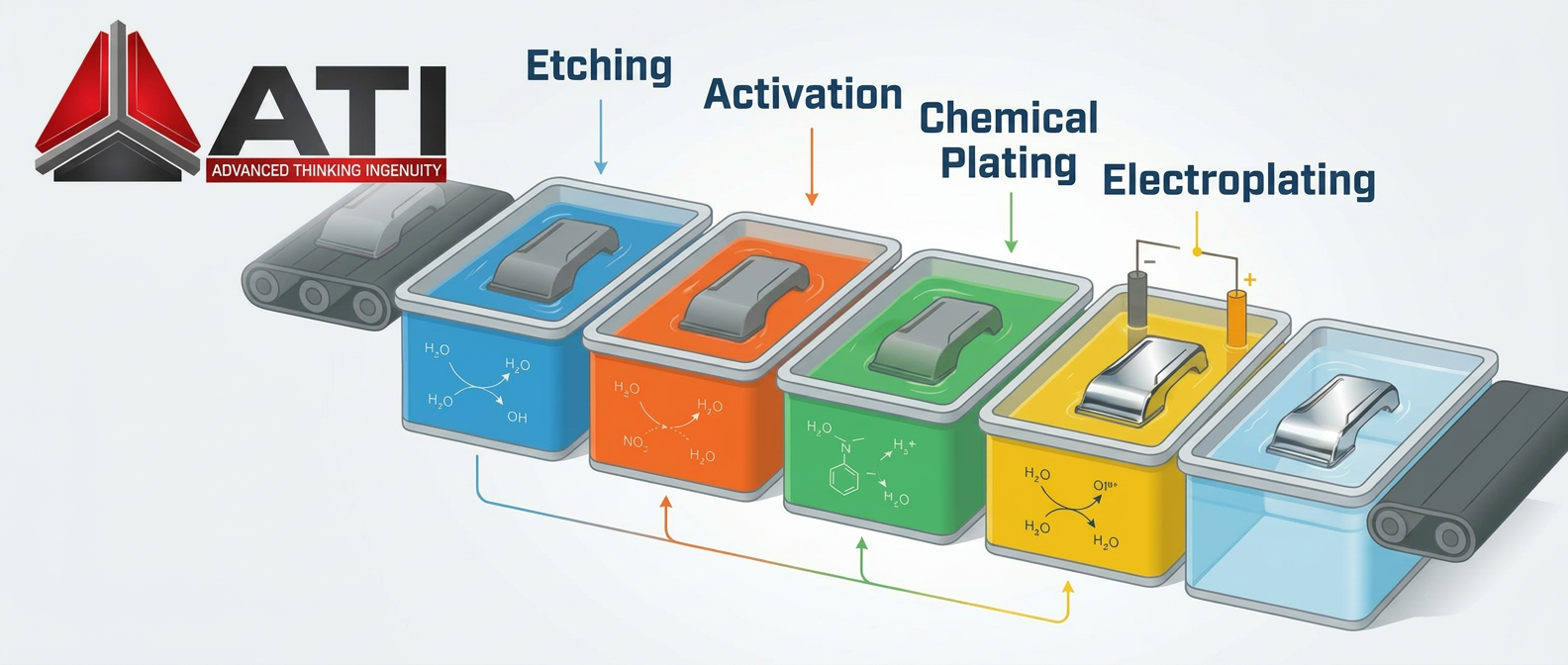
Since plastic is an electrical insulator, the biggest challenge is getting metal to bond to it. Therefore, the process is divided into two main stages - the chemical stage (surface preparation) and the electrochemical stage (the plating itself). Here is a detailed breakdown of the main steps that take place at the plating facility:
1. Cleaning and Pre-treatment
Before anything else, the part must be completely clean of oils, dust, or release agents left over from the plastic injection molding process. Parts undergo thorough washing with mild alkaline solutions. Any trace of contamination at this stage will cause defects in the final coating.
2. Etching
This is one of the most critical steps. The plastic part (usually ABS) is immersed in a bath containing a strong mixture of chromic acid and sulfuric acid. This solution "attacks" a specific component of the plastic (butadiene) and creates microscopic cavities on the surface. These cavities will later serve as physical "anchors" to which the metal will grip.
3. Activation and Catalysis
Now the roughened surface must be turned into a substrate ready to receive metal. The part is dipped in a solution containing palladium and tin salts. The palladium settles into the microscopic cavities created during the etching stage and essentially acts as the catalyst for the next step.
4. Electroless Plating (Chemical Plating)
At this stage, the plastic is still non-conductive, so electricity cannot be used. The part is placed in a bath containing nickel or copper. Thanks to the palladium implanted earlier, a natural chemical reaction occurs, and a very thin layer of metal coats the plastic. At this point, our plastic has become electrically conductive in every sense.
5. Electroplating
From this point onward, the part is treated as metal. It is connected to a cathode (negative pole) and placed in plating baths containing anodes (positive pole) of the desired metals, typically in the following order:
- Copper layer - provides basic flexibility and improves brightness and adhesion.
- Nickel layer - delivers excellent resistance to corrosion and abrasion, and forms the base for the final tone.
- Chrome layer - the thinnest and final layer. It provides the distinctive shine, mirror-like appearance, high scratch resistance, and prevents the nickel from tarnishing over time.
Scratch and Corrosion Resistance
One of the key reasons to include chrome plating in a product development process is the dramatic upgrade in the mechanical properties of the plastic surface. Bare plastic can scratch easily and wear from everyday contact. In contrast, the final chrome layer is considered very hard on the Mohs scale, making the product exceptionally resistant to surface scratches, scuffs, and minor impacts.
In terms of chemical and environmental resistance, the solution is phenomenal. The nickel and chrome layers create an airtight barrier that protects the polymer from oxidation, direct sunlight, and various chemicals. These coatings are designed to meet the strictest standards of industries requiring corrosion resistance - such as exposure to salt, extreme humidity, and drastic temperature changes. Unlike iron parts that can rust, chrome-plated plastic does not suffer from internal corrosion, ensuring an exceptionally long product lifespan.
Key Applications in the Industry Automotive
The global automotive industry is arguably the largest customer of plastic plating technology. The need for car manufacturers to reduce vehicle weight to save fuel and lower emissions has led to replacing heavy metal parts with dedicated plastic components. However, the end consumer still demands the luxurious, shiny look of classic vehicles.
- Emblems and lettering - all company logos and model names on the trunk are made from chrome-plated plastic.
- Front grilles - the ventilation grids at the front of the vehicle, which define the car's design character, are almost always made from plated plastic due to their complex shapes and light weight.
- Door handles - high resistance to daily hand contact, wear, and perspiration.
- Interior trim - multimedia system frames, rings around air vents, and interior handles. These give the passenger cabin a premium feel.

Applications in the and Faucet Industry Sanitary
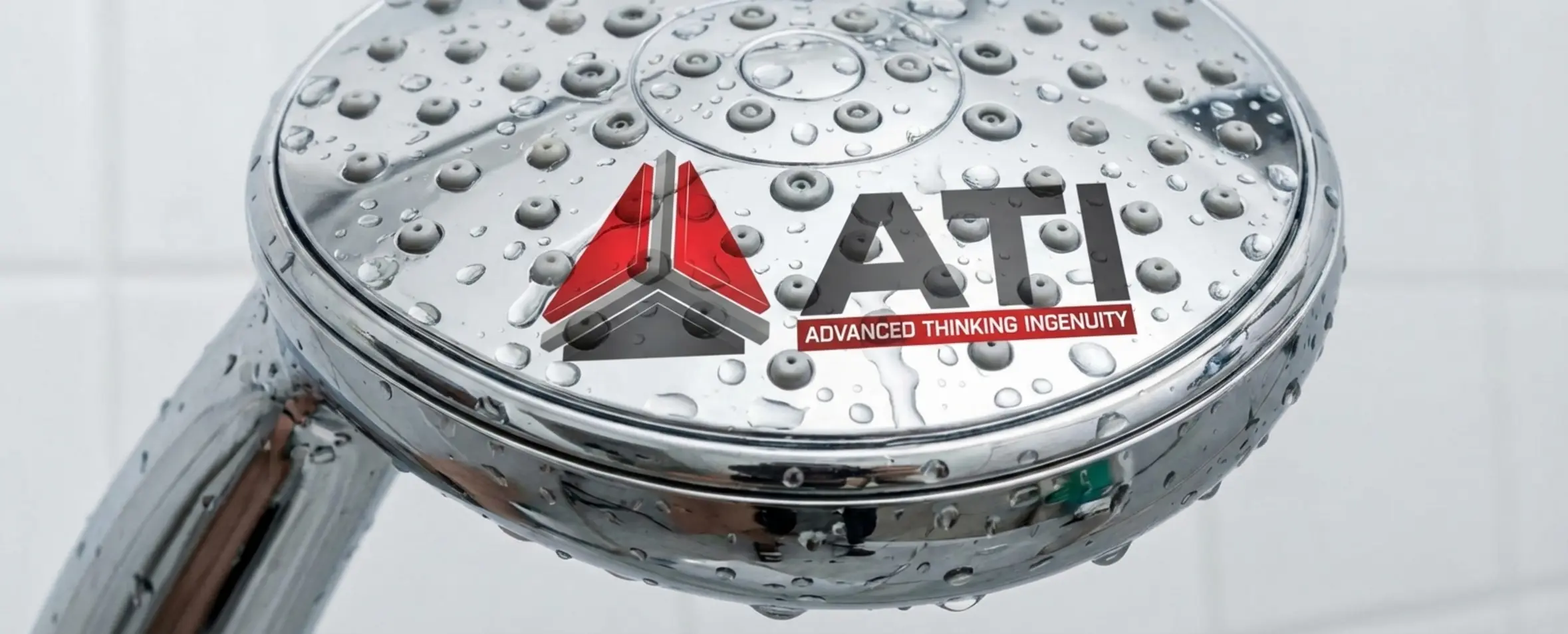
Another field where plastic plating has truly changed things is the bathroom and kitchen fixture industry. In the past, faucets and shower heads were made from cast brass - heavy and very expensive piping. Today, the majority of the market has shifted to engineering plastics with electroplating.
- Beyond the enormous savings in raw material costs, plated plastic has clear advantages in the bathroom. Plastic does not accumulate heat like metal, so a shower head with boiling water flowing through it will not burn the user.
- The ability to create complex product designs with rounded curves, ergonomic angles, and numerous water outlets is much simpler and cheaper in plastic injection than in CNC machining or metal casting.
- The plating provides complete protection against the constant moisture and limescale present in wet rooms.
Integrating Plating Into Product Engineering
When an entrepreneur comes with a product development idea that requires a premium look or high environmental durability, the engineering design stage (plastic design) is critical to the plating's success. Not every geometric shape is suitable for electroplating.
For example, very sharp corners can attract too much electrical current and accumulate excess metal, creating "burns" or roughness at the edges. Conversely, very deep recesses may suffer from insufficient current, and the metal will not reach them properly - a phenomenon known as uneven coating thickness.
| Design Aspect | Effect on Electroplating | Design Recommendation |
|---|---|---|
| Corners and angles | Current accumulation at sharp corners causes metal thickening | Design radii (rounded corners) of at least 0.5 mm at every edge |
| Plastic wall thickness | Abrupt thickness changes cause sink marks visible under plating | Maintain uniform wall thickness as much as possible throughout the part |
| Gate and ejector marks | Any tiny defect in the plastic will be doubled and highlighted after chrome plating | Place ejector pins and gate points in hidden areas of the product |
| Contact points | The part must be physically held by a conductive rack inside the bath | Pre-plan hidden tabs where the electrical clamp connects without leaving marks on the front |
Professional guidance from experienced engineers is the key to success. At ATI, we accompany entrepreneurs from the concept stage through to mass production. Our experience managing production teams and injection and plating factories in China allows us to guide designers and engineers in advance. We plan the injection tools (molds) to perfectly match plating facility requirements, preventing frustration, saving valuable time, and avoiding production of rejected batches.

Tip From the Experts
As a plastics expert, I always remind entrepreneurs: chrome plating does not hide defects in plastic - it actually amplifies them like a magnifying glass. Therefore, the engineering design stage must be several times more careful. Always choose ABS plastic of Plating Grade, and make sure your mold is polished to mirror level. An early investment in smart design will save you thousands of dollars in rejection rates during mass production.
Key Takeaways
Multi-Layer Process
Copper, nickel, and chrome layers combine to deliver a premium metallic appearance with exceptional durability on lightweight plastic parts.
Corrosion Resistance
Chrome and nickel layers create an airtight barrier against oxidation, salt, humidity, chemicals, and temperature extremes.
Automotive Standard
The global auto industry relies on chrome-plated ABS for grilles, emblems, door handles, and interior trim to reduce weight without sacrificing luxury.
DFM Critical
Sharp corners, uneven wall thickness, and gate mark placement must be carefully engineered to prevent plating defects.
Safety in Wet Rooms
Plated plastic does not conduct heat like metal, making it safer for shower heads and faucets exposed to boiling water.
End-to-End Support
ATI guides the full process from concept through injection mold design to plating facility coordination in China.
Frequently Asked Questions
Is every type of plastic suitable for electroplating?
No. Most of the plating industry works with ABS plastic, or a PC/ABS blend. The reason is the chemical structure of ABS, which allows acid solutions to etch it in a controlled manner and create microscopic anchors to which the metal grips. Other plastics like PP (polypropylene) or PE are very difficult to plate and require much more complex and expensive preparation processes.
Is chrome plating on plastic more expensive than regular painting?
Yes, electroplating is more expensive than liquid or oven painting. This is due to the many process steps, the use of expensive metals (such as palladium, nickel, and copper), and the energy and water consumption involved. However, the value for money is very high, as the durability and premium look achieved cannot be replicated with regular paint - which increases the product's perceived value to the customer.
Why does chrome plating sometimes peel off plastic products?
Peeling of the plating almost always results from a failure in the manufacturing process. This can happen due to poor surface preparation, contamination in one of the rinse baths, insufficient etching of the plastic, or even internal stresses in the raw material created during plastic injection. A quality manufacturer will perform strict adhesion tests (such as a cross-hatch tape test) before releasing goods.
Is the process environmentally friendly?
Traditionally, chrome plating used highly toxic chemicals, especially hexavalent chromium (Chromium 6). However, today, due to strict global regulations, most modern facilities have switched to trivalent chromium (Chromium 3), which is safer and has a reduced environmental impact. Additionally, advanced plating facilities are equipped with closed systems for treating and purifying chemical wastewater before discharge.
How do you clean and maintain chrome-plated plastic parts?
Maintenance is very simple. Use a soft cloth (such as microfiber), warm water, and mild soap. It is very important to avoid using abrasive sponges, scouring cleaners, or strong acids (such as hydrochloric acid for limescale), as these can scratch the top layer and lead to damage to the shine and even peeling of the plating over time.
Can a 3D-printed prototype be electroplated?
It is possible but complex. Regular 3D printing (such as FDM) leaves visible layer lines, and chrome plating will only emphasize them. To plate a prototype, you must use high-resolution advanced resin printing (SLA), manually sand and polish the part to mirror level, and only then perform dedicated plating processes. This is an excellent solution for testing design feasibility before opening expensive molds.