
Have You Stayed a Child? The Entrepreneurial Power of Childlike Thinking
Natural curiosity, fearlessness, and out-of-the-box thinking are childhood traits that are critical for inventors and entrepreneurs.
In Brief
Natural curiosity, fearlessness in the face of failure, and out-of-the-box thinking are traits that characterize children, but they're also critical for entrepreneurs and inventors. The product development process demands that same initial boldness, combined with precise engineering planning and a business vision.
While the child within us provides the spark and creativity, the business world demands pragmatism. The winning combination is preserving that youthful entrepreneurial spirit while enlisting experts in development, design, and manufacturing who know how to take the raw dream and turn it into a working, compliant, and profitable product.
Remember the days when a simple cardboard box became a spaceship, and a wooden stick was a magic sword? The ability to look at the world with fresh eyes, free of judgment and fear, is not just sweet nostalgia. In the world of entrepreneurship and product development, these 'childlike' traits are exactly the difference between an idea that stays in a drawer and a revolutionary product that conquers the market. If you have an idea that's tingling at your fingertips, this article is exactly for you.
The Economic Power of Imagination
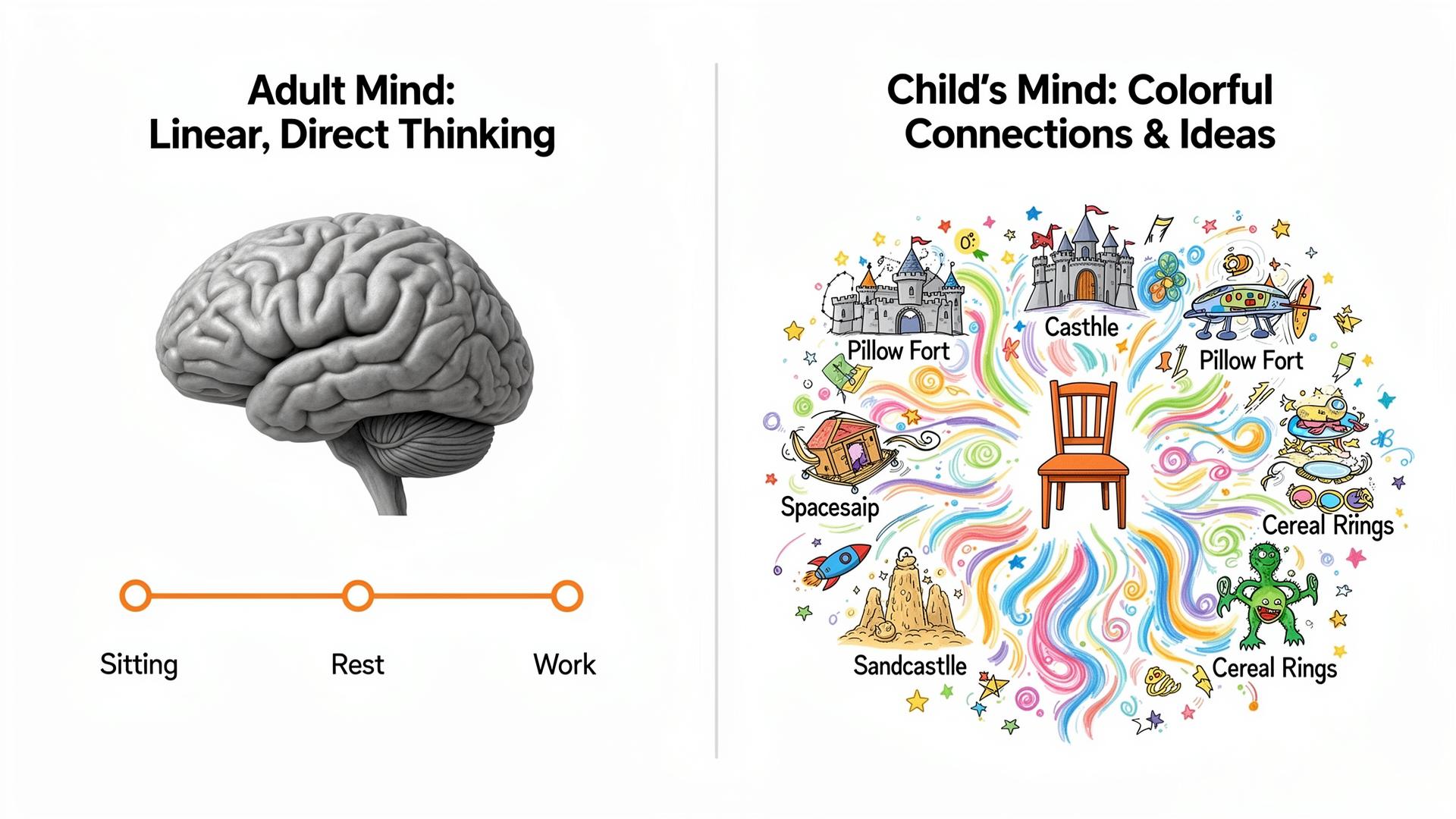
Children have an enormous advantage over adults: they haven't yet learned what's 'impossible.' As we mature, we tend to fix our thinking in familiar patterns, fear criticism, and avoid risks. Yet the greatest inventions in history were born from exactly that place of play and experimentation - a place where people weren't afraid to ask 'What if?'.
In the business development world, this trait is called 'Divergent Thinking' - the ability to generate a wide range of solutions to a single problem. Research shows that children excel at this naturally, while adults need to work hard to recover this ability.
From Playing in the Sand to Industrial Product Development
The transition from the play stage to the action stage is where many entrepreneurs get stuck. There's a vast difference between a brilliant idea and the ability to manufacture it. Children enjoy the process itself - they build a tower, it falls, and they rebuild it better. This is exactly the essence of prototype development.
In the professional process, we don't call it 'failure' but 'iteration.' Each version of the product teaches us something new about human engineering, material selection, and required durability.
Why Entrepreneurs Should Embrace Trial and Error
- Removing inhibitions: Fear of failure paralyzes innovation. A playful approach enables calculated risk-taking.
- Creative problem solving: When not bound by old rules, you find cheaper and more efficient solutions.
- Rapid learning: Hands-on experimentation teaches far more than theory alone.
According to data published in Forbes business magazine, companies that encourage a culture of trial and error (similar to children's play) show significantly higher growth rates compared to conservative companies.
The Steps in Turning a Dream into Reality
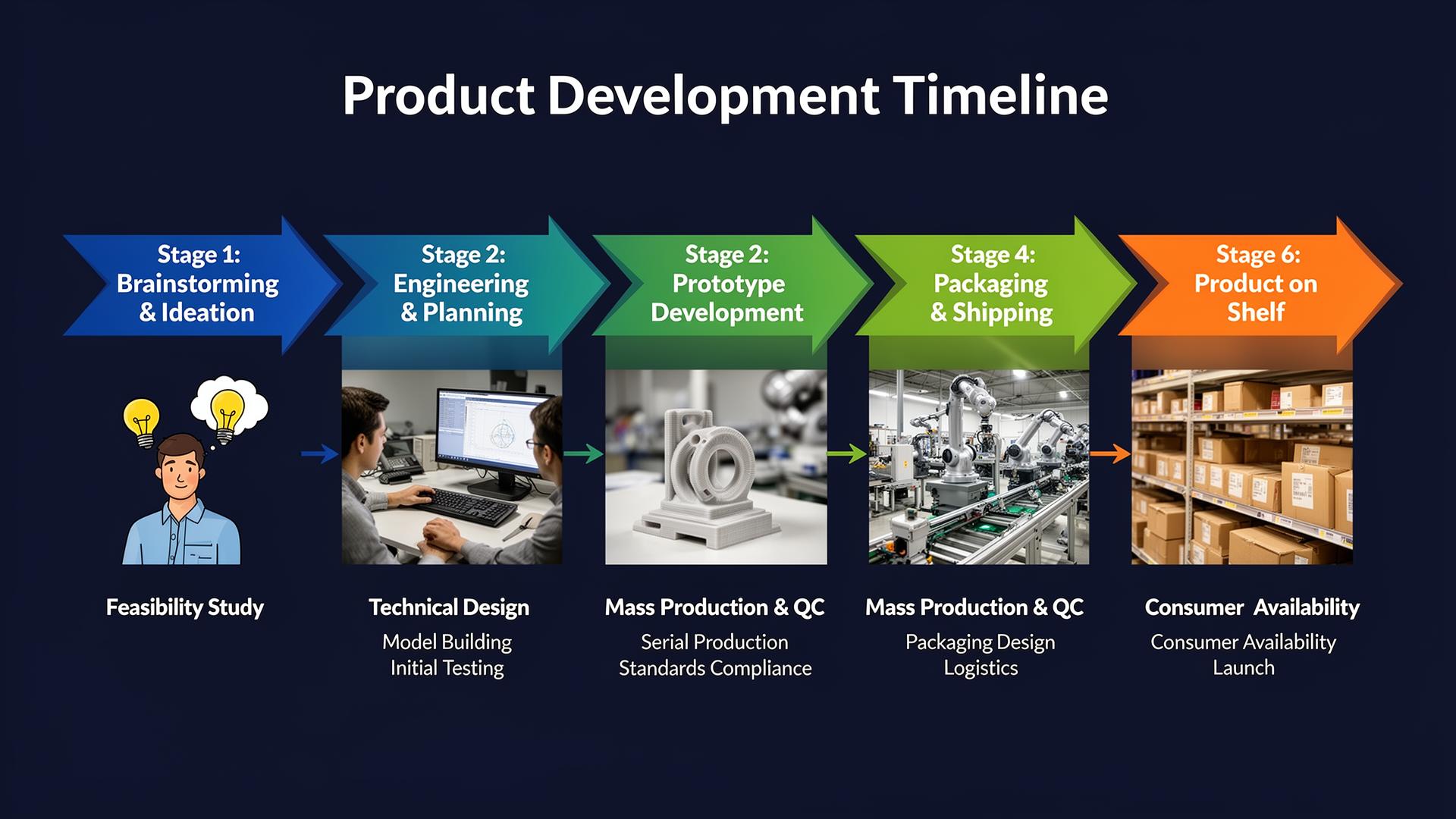
For your inner child to truly flourish, it needs a responsible adult to steer the ship. This is where the structured process of developing an idea into a product comes in. It's not a guessing game but an orderly methodology:
- Feasibility study: Is the idea economically viable? Can it be manufactured at a reasonable cost?
- Initial characterization and design: Turning the thought into a sketch, and the sketch into a 3D rendering.
- Mechanical engineering design: Diving into the details of wall thickness, plastic types, and moving mechanisms.
- Model production: Printing and assembling prototypes to test functionality.
- Preparation for mass production: Designing molds and production lines.
The Dreamer vs. The Executor
To understand the gap we bridge, it's worth looking at the following table illustrating the difference between the initial approach and the required final outcome:
| Aspect | The 'Dreaming Child' Perspective | The Executing Engineer's Perspective |
|---|---|---|
| Raw Material | "It needs to be strong and colorful" | Glass-fiber reinforced polypropylene with UV resistance |
| Cost | "As cheap as possible, as long as it works" | BOM optimization to reduce per-unit manufacturing costs |
| Usage | "It's fun to play with" | Ergonomics, safety standards, and user experience (UX) |
| Manufacturing | "Let's build one and see" | Design for injection molds (DFM) and mass production |
Are You the Next Inventor?
At ATI Propel, we meet people every day who have decided not to give up on their curiosity. The difference between them and others is the willingness to take the next step. Product development is a fascinating process that combines the purest creativity with the most advanced technology.
It's important to remember that even the greatest inventors like Thomas Edison or the Wright Brothers started with childlike curiosity and a desire to 'play' with the laws of nature. The difference is that they didn't stop there - they kept trying, failing, fixing, and succeeding.

Tip From the Experts
Invention is where intelligence enjoys playing. Don't stop playing - just make sure you have the tools to turn the game into reality.
Key Takeaways
Divergent Thinking
Children naturally generate dozens of solutions to one problem - entrepreneurs must relearn this skill.
Iteration Over Perfection
Like kids rebuilding a toppled tower, great products emerge through rapid cycles of testing and refinement.
Dream to Production
A structured methodology transforms a raw idea into a compliant, manufacturable product.
Expert Partnership
Bring the vision; let experienced engineers and designers handle the technical execution.
IP Protection
NDAs and patent support ensure your idea stays protected throughout the development process.
End-to-End Support
From feasibility study through prototyping, manufacturing, quality control, and shipping.
Frequently Asked Questions
Do I need technical knowledge to develop a product?
Not at all. Your role as an entrepreneur is to bring the vision, the need, and the idea. The role of a development company is to bridge the technical gap. Our team includes engineers, designers, and manufacturing specialists who can translate your abstract idea into engineering language, drawings, and production molds.
How much does it cost to develop a prototype for a new product?
Prototype development costs vary greatly depending on product complexity. A simple plastic product prototype will be significantly cheaper than one combining electronics, smart boards, and communication. At ATI we perform an organized cost assessment during the feasibility study phase, so you can know the required budget before investing in full development.
Is my idea protected when I approach you?
Absolutely. We maintain complete confidentiality. It's customary to sign a Non-Disclosure Agreement (NDA) before revealing the full idea. Protecting your intellectual property is our top priority, and we accompany many entrepreneurs through sensitive processes requiring absolute discretion.
Why is it important to conduct a feasibility study before anything else?
A feasibility study is your 'insurance policy.' It's designed to verify that there's economic and technical sense in manufacturing the product before spending substantial money on development. In the study, we examine expected manufacturing costs, competitors, raw materials, and technological barriers to prevent a situation where you develop a product that can't be sold at a profit.
Do you also help with product manufacturing or just development?
We provide a complete Turn-Key solution from end to end. This means we don't just plan the product on paper or computer - we also manage the manufacturing process, typically in China, with factories we've worked with for many years. We handle quality control, shipping, and packaging until the product reaches its destination.
How long does the process take from idea to finished product?
The timeline varies depending on project complexity. Simple products can reach production within several months (about 4 to 6 months), while complex technological products may require a year or more of development, testing, and regulation. We build a detailed Gantt chart at the start of the project to give the entrepreneur a realistic timeline.