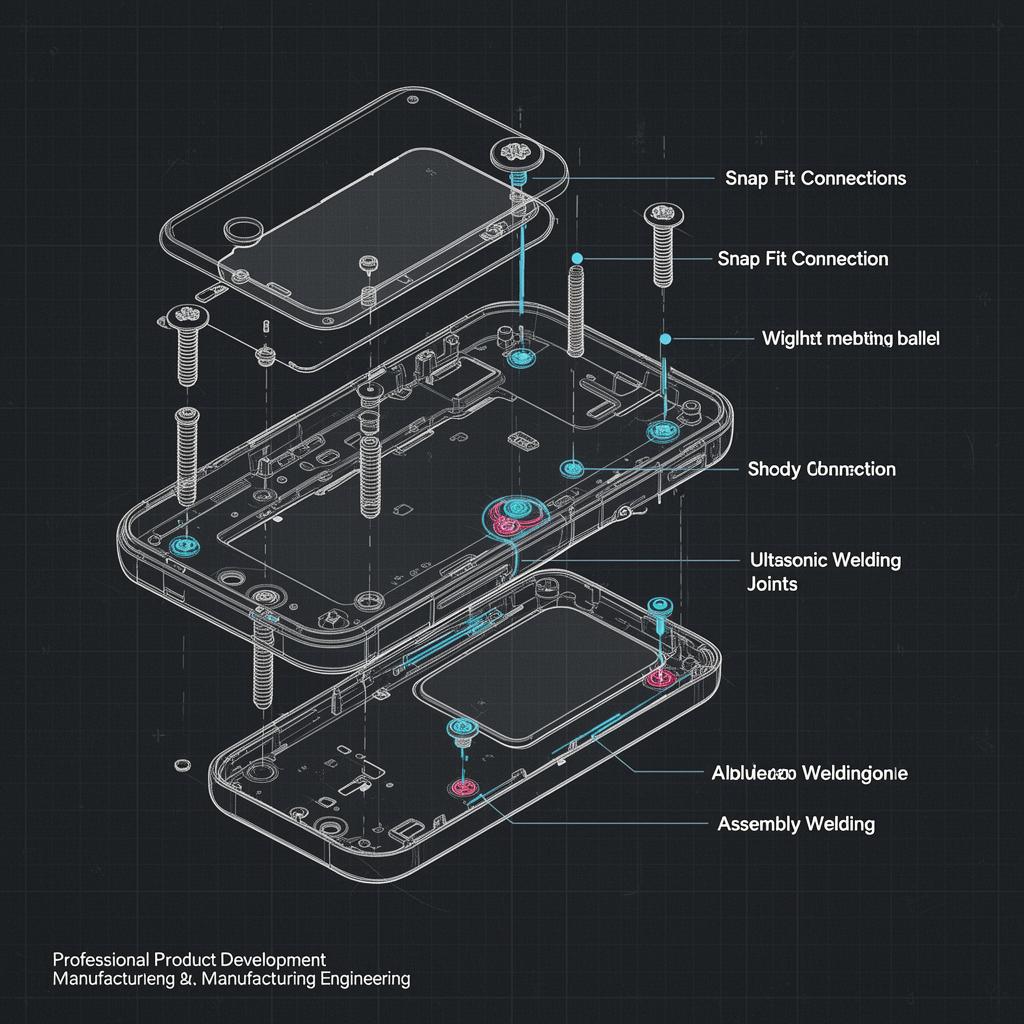
Mechanical Assemblies: Screws, Snap Fits, or Welding?
The right fastening method can cut production costs, speed up assembly, and improve your product's durability.
In Brief
The quick answer depends on your product's requirements. Screw fastening provides high structural strength and convenient disassembly for repairs, but requires longer assembly time and additional component costs. Snap fit connections, on the other hand, offer fast, inexpensive assembly without extra parts, but are more complex to design and may be more prone to breakage during repeated disassembly.
Welding or plastic bonding delivers a permanent, completely sealed connection, making it ideal for products requiring waterproofing or preventing user access. However, this method eliminates any future repairability and requires dedicated, expensive assembly equipment. The right choice balances maintenance requirements, manufacturing budget, and the product's operating environment.
Every entrepreneur or developer knows the moment when an idea takes shape and becomes a tangible model. But beyond form and functionality, one of the most critical questions in the manufacturing process arises - how do we join the product's parts together? The choice of assembly method directly impacts manufacturing costs, assembly line time, long-term product maintenance, and user experience. In this article, we explore in detail into the three most common methods - screws, snap fits, and welding - and explore how to make the best engineering and economic decision for your project.
The Philosophy of Design for Assembly
When we approach the process of product design and engineering, one of the key guiding concepts is DFA - Design for Assembly. The goal is to make the assembly process as efficient, fast, and affordable as possible, without compromising the final product's quality. Every extra second required by a worker or robot on the production line to join two parts translates into significant costs in mass manufacturing.
Here at ATI, drawing on extensive experience managing production lines, we see how entrepreneurs sometimes tend to overlook this stage early on. They focus on aesthetics or technology and leave the assembly question for last. Our approach maintains that the fastening method should be defined during the initial specification phases, as it dictates the mold structure, material selection, and final pricing.
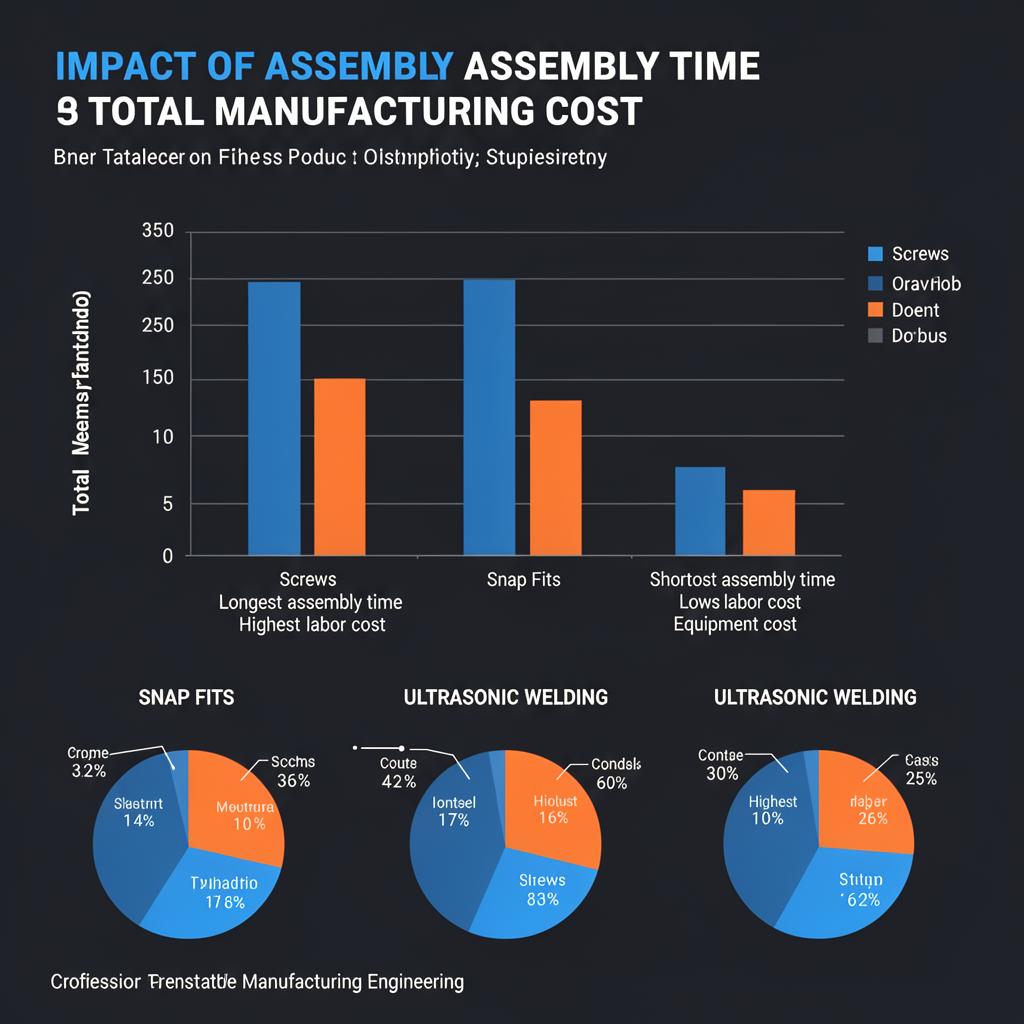
Screw Fastening - A Classic, Solution Strong
Screws are arguably the most familiar and widespread fastening method in the world of mechanics. They are external fastening components, typically made of metal, that penetrate through the product's parts and clamp them together with considerable force. There are many types of screws, from machine screws requiring metal counter-threading, to self-tapping screws designed for direct penetration into injection-molded plastic parts.
Advantages of Using Screws
The most obvious advantage of screws is structural strength. A metal screw can bear very high loads and withstand shocks. According to authoritative engineering sources, screws provide one of the most reliable fastening methods in modern industry. Another critical advantage is disassembly capability. A product closed with screws can be easily opened for repairs, battery replacement, or internal component upgrades.
Additionally, designing plastic molds for screw-fastened products is generally simpler, as there is no need for complex draft angles or intricate undercuts in the injection mold.
Challenges and Disadvantages of Screws
- Assembly time: Inserting, aligning, and driving a screw takes valuable production line time.
- Component costs: Every screw is an additional item on the bill of materials, increasing procurement and logistics costs.
- Aesthetic issues: In many cases, screw heads must be concealed with stickers or plastic caps to maintain a clean product appearance.
Snap Fit Connections - Assembly Lightning-Fast
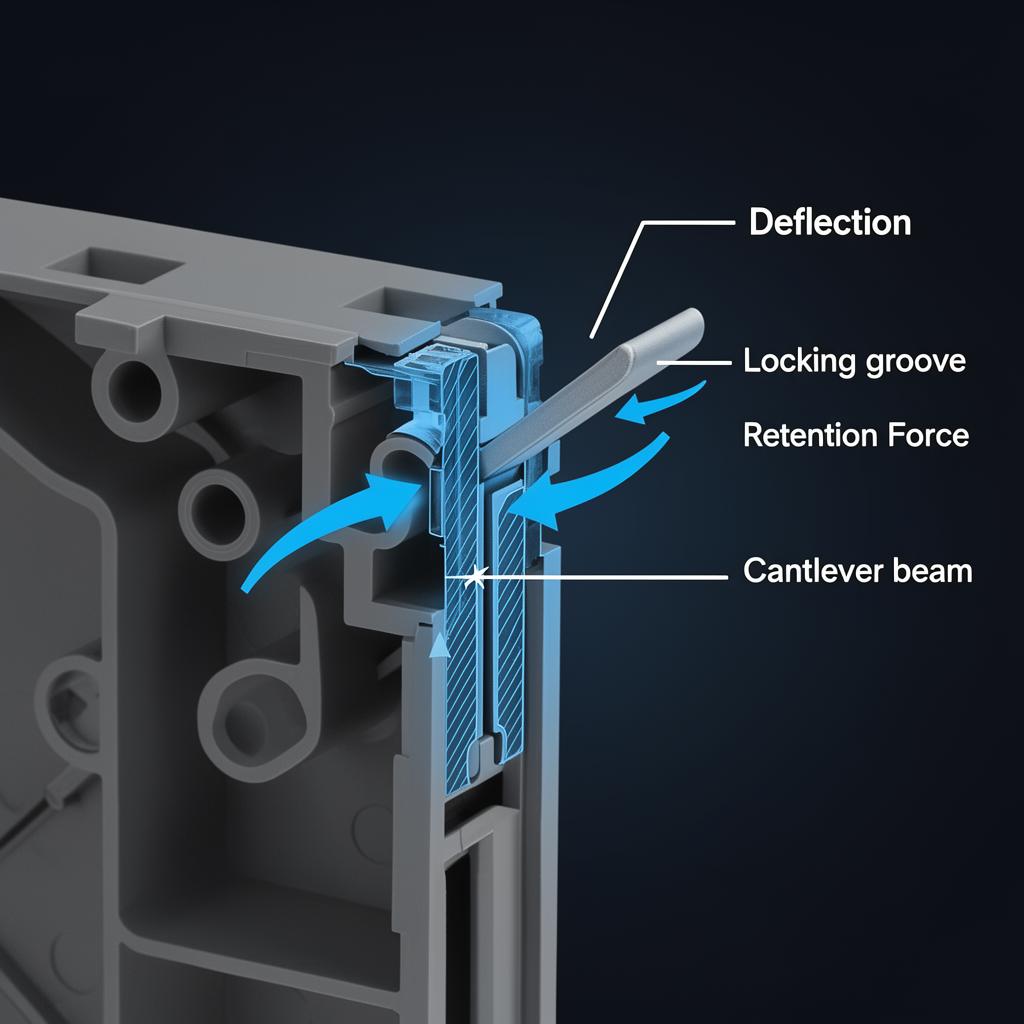
Snap fits, also known as clip connectors, are flexible fastening features integrated directly into the plastic structure of the product. Their operating principle is based on temporarily deflecting a plastic tab during insertion, which then returns to its position inside a dedicated recess, producing a characteristic click sound indicating a secure lock.
Why Engineers Love Snap Fits
When consulting with a professional product development company, the first recommendation for reducing assembly costs is typically switching to snap fits. The reason is simple - no additional parts are needed. The snap fit is manufactured during the same injection molding process as the part itself. Assembly on the production line takes a fraction of a second through a simple push of parts together, without the need for electric screwdrivers or special tools.
The product's exterior remains clean and refined, with no visible holes. This is especially important for elegant consumer products, medical devices, and wearable electronics.
The Complexity of Designing Snap Fits
Despite the enormous advantages, designing a snap fit requires high engineering skill. If the tab is too rigid, it will break during assembly. If it is too flexible, the product will not close properly or may open on its own when dropped. The wall thickness, plastic material type, and insertion angle must all be calculated precisely.
An additional disadvantage lies in the difficulty of disassembly. Many snap fits are designed for one-time closure. An attempt to open the product by an end user may lead to tab breakage and irreversible damage to the product.
Welding and Plastic Bonding - When a Connection is Required Permanent
There are cases where we want to join parts permanently and completely sealed, with no possibility of disassembly ever. In such cases, methods like ultrasonic welding or industrial adhesive bonding come into play. Ultrasonic welding uses high-frequency sound waves to locally melt the contact points between two plastic parts, creating a perfect fusion between them.
When to Choose Welding
Welding is an excellent choice for products that must be waterproof and dustproof, such as diving equipment or action cameras. According to engineering research on ultrasonic welding, this process ensures the highest level of sealing and joint strength equal to the strength of the material itself.
It is also an ideal solution for safety products like power supplies or children's toys, where we want to completely prevent user access to internal components or batteries.
Comparative of Fastening Methods Summary
To organize the information, we have compiled the key differences in the following table:
| Parameter | Screws | Snap Fits | Welding |
|---|---|---|---|
| Assembly Time | Long | Very Short | Medium to Short |
| Extra Part Costs | High (purchasing screws) | Zero | Zero (but requires expensive equipment) |
| Disassembly & Repair | Excellent | Limited to Problematic | Impossible |
| Water Sealing | Requires additional rubber gaskets | Weak | Excellent |
| Mold Design Complexity | Low | Very High | Medium |
Making the Decision for Your Product Professional
So how do you choose? It all starts and ends with understanding your product's lifecycle. If you are developing industrial equipment that requires calibration, maintenance, and periodic part replacement, screws are your best friend. On the other hand, if you are developing a TV remote control or an inexpensive plastic toy manufactured in millions of units, using screws would be a costly economic mistake - focus on precise snap fit design instead.
When we lead product development processes, we make sure to conduct an engineering risk assessment for each assembly method. We often find that the combination is the winner. For example, closing the outer housing with snap fits to maintain a clean appearance and fast assembly, while using internal screws to securely fasten a heavy circuit board in place.

The secret lies in proper trial and error during the prototyping stage. Physically testing snap fit strength using quality 3D printing, or checking thread wear after multiple opening and closing cycles, will give you the confidence needed before transitioning to mass production with expensive steel molds. Do not leave assembly decisions for the end of the process - integrate them into your initial vision.

Tip From the Experts
The most common mistake entrepreneurs make is falling in love with the product's clean look and insisting on snap-fit-only assembly, without considering the service technician who will need to replace a battery two years down the line. Smart engineering design always finds the balance between superior aesthetics and practical maintenance.
Key Takeaways
Choose by Lifecycle
Select your fastening method based on the product's maintenance, repair, and end-of-life requirements.
Snap Fits Save Time
Snap fit assembly takes a fraction of a second with zero extra parts, dramatically cutting production line costs.
Welding for Sealing
Ultrasonic welding creates permanent waterproof bonds equal to the material's own strength.
DFA from Day One
Define the assembly method during initial specifications to avoid costly redesigns later.
Combine Methods
The best products often use snap fits for the exterior shell and screws internally for heavy components.
Test Before Tooling
Validate snap fit strength and screw wear on prototypes before committing to expensive steel molds.
Frequently Asked Questions
Do snap fits tend to break faster than screws?
Generally yes, because snap fits are made of plastic while screws are metal. However, precise engineering design that accounts for material flexibility and load distribution can produce very strong snap fits that last for years, provided they are not intended for daily opening and closing.
Can screws and snap fits be combined in the same product?
Absolutely, and this is actually a highly recommended practice in the industry. Many engineers use snap fits to position parts quickly on the production line, then add two or three key screws to provide the final structural strength to the entire enclosure.
Which fastening method is the cheapest for manufacturing?
Snap fit assembly is the cheapest during ongoing production, as it eliminates purchasing additional parts and saves expensive labor time. However, it is important to remember that the initial injection mold cost for a product with snap fits may be higher due to the mold's increased complexity.
How do you achieve complete waterproofing in a plastic product?
For absolute sealing at IP68 rating and above, ultrasonic welding is recommended as it melts the plastic and turns two parts into one sealed unit. If future opening is required, screws should be used in combination with a dedicated silicone gasket pressing against the walls.
Can snap fit designs be tested with 3D printing?
Yes, but with caution. 3D printing materials differ in their properties from industrial injection molding materials and tend to be more brittle. Therefore, a snap fit that works perfectly in injection molding may break during 3D printing. It is recommended to use advanced printing technologies with flexible properties.
What is the preferred method for children's electronic products?
In products designed for children, safety comes first. Standards prohibit easy access to batteries or electrical circuits. Therefore, welding is typically chosen to completely prevent opening, or security screws that require a special screwdriver are used, ensuring only an adult can open the battery compartment.