
Turning a Field Problem Into a Product: What You Must Know Before You Start
Every tradesperson has that one moment of frustration that sparks an idea. Here is what separates the ideas that ship from the ones that stall.
In Brief
Every tradesperson has that one moment. For Rami, a licensed plumber with 15 years of experience, it happened on a Tuesday afternoon - crouched under a sink in a cramped utility room, frustrated for the hundredth time by a simple task that no existing tool handled well. The angle was wrong, the available products were designed by people who had clearly never worked in the field, and the workaround he had been using for years was a jury-rigged solution that wasted time on every job.
That evening, Rami sketched out his idea. A purpose-built tool that solved exactly this problem. He showed it to colleagues at a trade association meeting - and their reaction told him everything: "I've needed this for twenty years." Within weeks, he was talking to a designer, getting quotes from manufacturers, and mentally spending his first million. The logic was airtight: he knew the problem better than anyone, the market was real, and the solution was obvious.
Six months later, Rami had burned through 80,000 NIS, held a prototype that didn't quite work, and discovered that two competitors in Germany were already selling something close. He hadn't done anything wrong, exactly - he just hadn't done the right things first.
Turning a Field Problem Into a Product Is Not Just About Having the Right Idea
The exciting thing about professional-pain-driven product development is that the insight is real. Rami's frustration was genuine. His colleagues' validation was genuine. The market need was genuine. ATI Propel sees this type of entrepreneur regularly - the expert-turned-inventor - and they are often the most passionate founders in the room.
But passion built on deep domain expertise is not the same as a validated product opportunity. The mistake isn't the idea. It's the assumption that knowing the problem is equivalent to understanding the path from problem to product. Turning a field problem into a product requires a structured development process, not just insider knowledge. At ATI, we have seen brilliant tradesperson insights die in manufacturing, and we have seen modest ideas turn into scalable products - because the difference was process, not inspiration.
Busting the Myth: The Check That Must Come Before Investing
Most entrepreneurs in Rami's position jump straight to "how do I build this?" The right first question is actually "should I build this - and in what form?" ATI's approach always front-loads the intelligence work before a single shekel goes toward tooling or production.
Here is what that looks like in practice. Before any development investment, ATI examines:
- Market landscape - Are existing solutions close enough? What is the real gap, and is it commercially significant or just personally annoying?
- User segmentation - Is the pain shared broadly across the profession, or is it specific to a niche within a niche?
- Regulatory and certification landscape - Does this product category require CE marking, UL certification, or industry-specific compliance that could delay or kill commercialization?
- IP position - Are there patents in the space? Is the novel mechanism actually protectable?
- Manufacturing feasibility - Can this be produced at a unit cost that supports a viable retail or B2B price point?
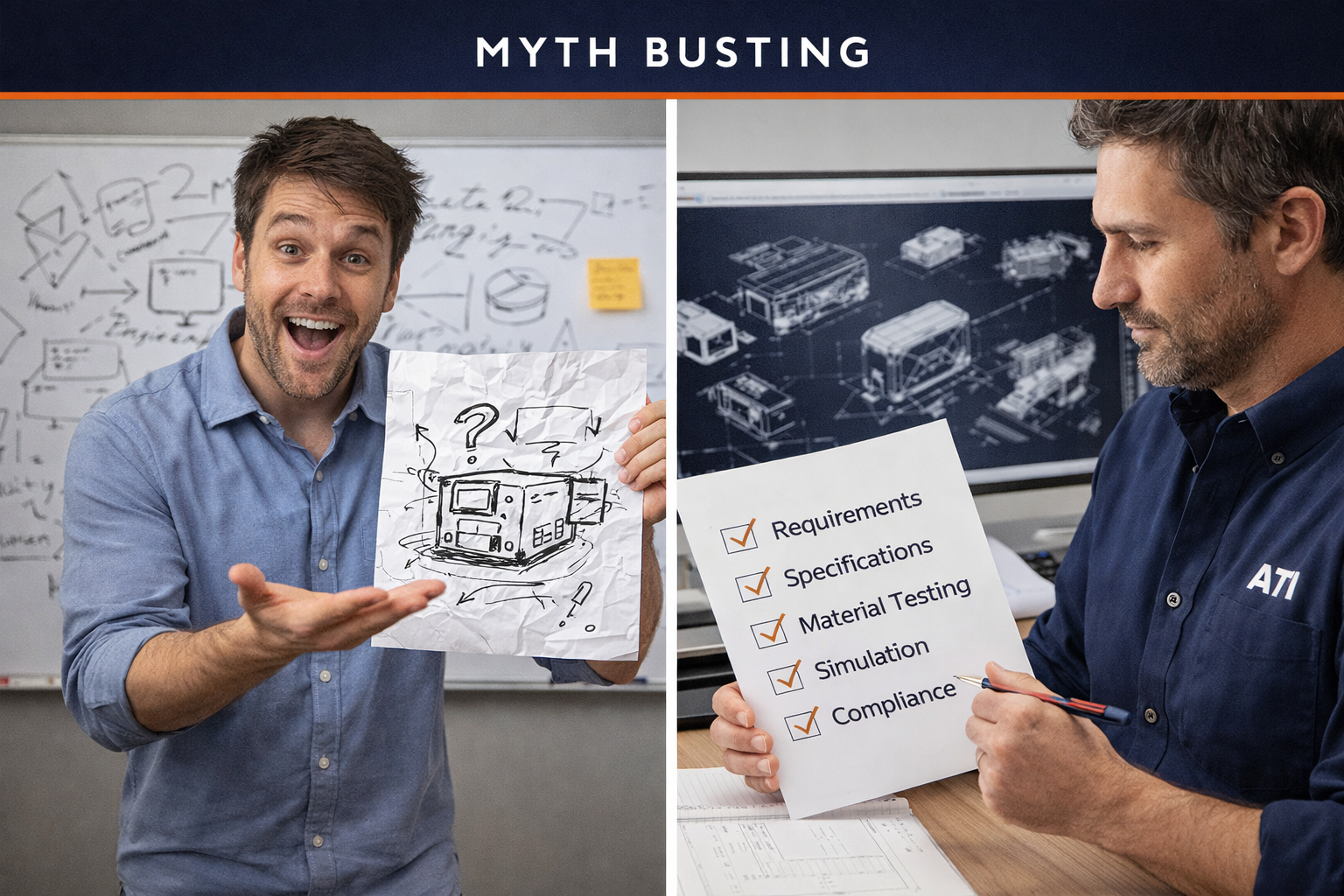
Once the landscape is clear, ATI moves through a defined process:
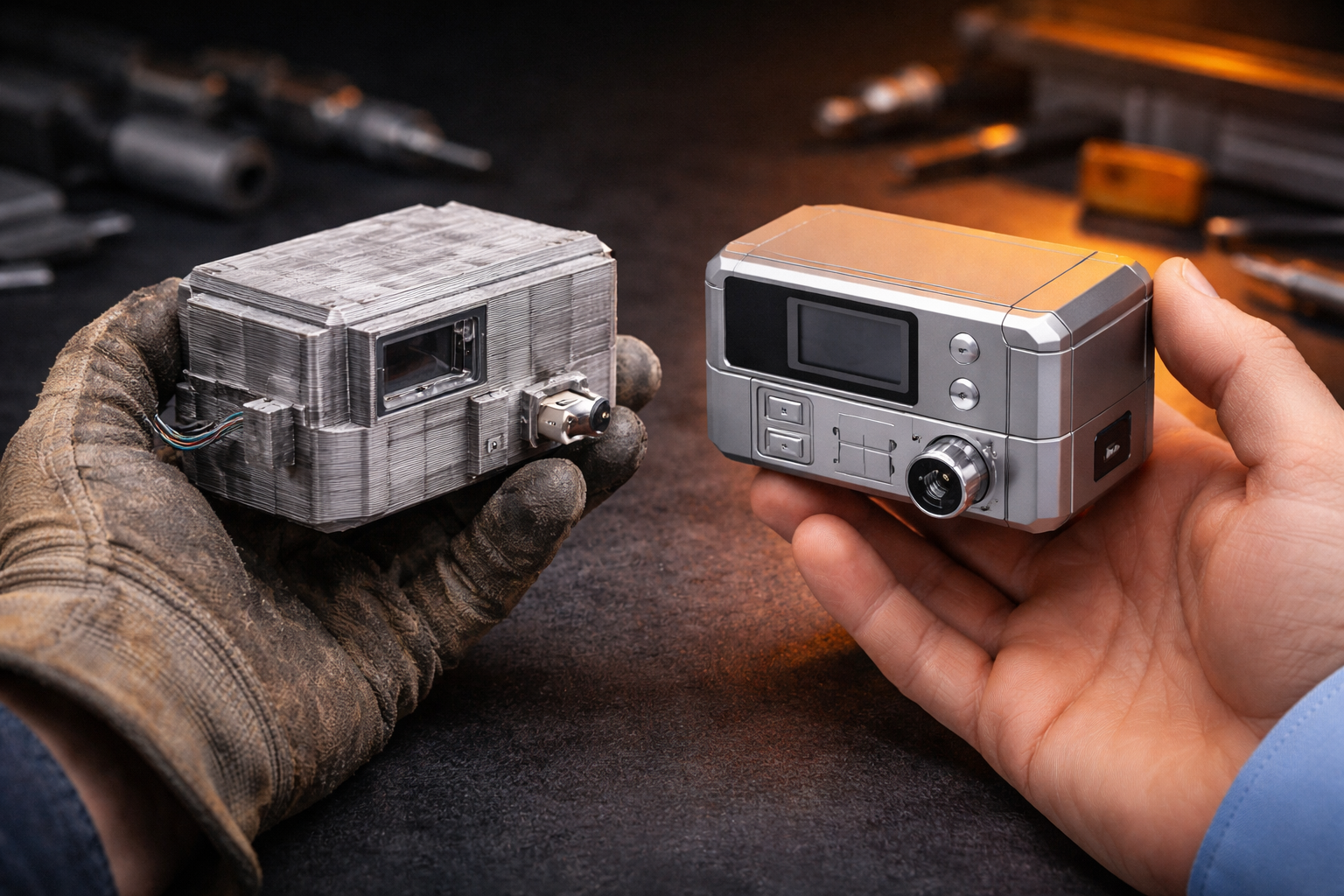
- Concept definition and DFM (Design for Manufacturability) review - shaping the idea with production reality in mind from day one
- Prototype iteration - functional prototypes built to test core mechanisms, not aesthetics
- Supplier identification in China - using ATI's established manufacturing relationships to find the right production partner
- Pilot production run - small-batch manufacturing to validate quality and process before scaling
- Serial production support - ongoing quality oversight through to volume production
The professionals who succeed in turning a field problem into a product are not the ones with the best idea - they are the ones who validated the idea before they fell in love with a specific solution.

Tip From the Experts
The professionals who succeed in turning a field problem into a product are not the ones with the best idea - they are the ones who validated the idea before they fell in love with a specific solution.
Key Takeaways
Real-World Insight
Domain expertise from years in the field gives you an authentic problem to solve - the strongest starting point for product development.
Validate Before Building
Market landscape, IP position, and manufacturing feasibility must be confirmed before committing development budget.
Regulatory Awareness
CE marking, UL certification, and industry compliance can delay or kill commercialization if not addressed early.
DFM From Day One
Design for Manufacturability ensures your concept is shaped by production reality, not just functional imagination.
End-to-End Process
ATI accompanies entrepreneurs from feasibility through serial production with on-the-ground manufacturing relationships.
Feasibility Saves Money
A feasibility check that prevents a dead-end development path is one of the most valuable investments you can make.
Frequently Asked Questions
How much does it typically cost to develop a product based on a professional field problem?
Development costs vary significantly depending on product complexity, materials, and required certifications. A straightforward mechanical tool might move from concept to pilot production for 150,000-350,000 NIS. Products requiring electronics, regulatory approvals, or complex manufacturing processes can run considerably higher. ATI provides a detailed cost estimate after the initial feasibility assessment - so you know what you are getting into before committing.
How long does the process take from idea to first production run?
A realistic timeline from structured concept to first pilot-production units is typically 12-18 months. This includes concept refinement, DFM, prototyping rounds, supplier qualification, and pilot production. Entrepreneurs who try to compress this timeline by skipping validation steps almost always pay for it later - in redesign costs, rejected shipments, or products that don't find a market.
What is actually included in ATI's development process?
ATI accompanies the entrepreneur through the full process: feasibility assessment, concept development, engineering and DFM, prototype production, supplier selection and management in China, pilot run, and scaling to serial production. The process also includes guidance on IP strategy, product positioning, and certification pathways - not just the physical product itself.
When is turning a field problem into a product NOT the right move?
Not every genuine professional pain point is a viable product opportunity. If the addressable market is too narrow, the manufacturing cost structure doesn't support a profitable price point, or a close-enough solution already exists and dominates distribution channels, the economics may not work. ATI is direct about this - a feasibility check that saves an entrepreneur 300,000 NIS in dead-end development is one of the most valuable things we can offer.
What does ATI do differently from a standard product design agency?
Most design agencies stop at the prototype or at handing off files to a manufacturer. ATI's model is end-to-end: we own the process from concept through serial production, with deep on-the-ground manufacturing relationships in China. This means DFM considerations are built into the design from the start - not bolted on when a factory says "we can't make this." For entrepreneurs with no manufacturing background, this integrated model is the difference between a concept that ships and one that stalls.