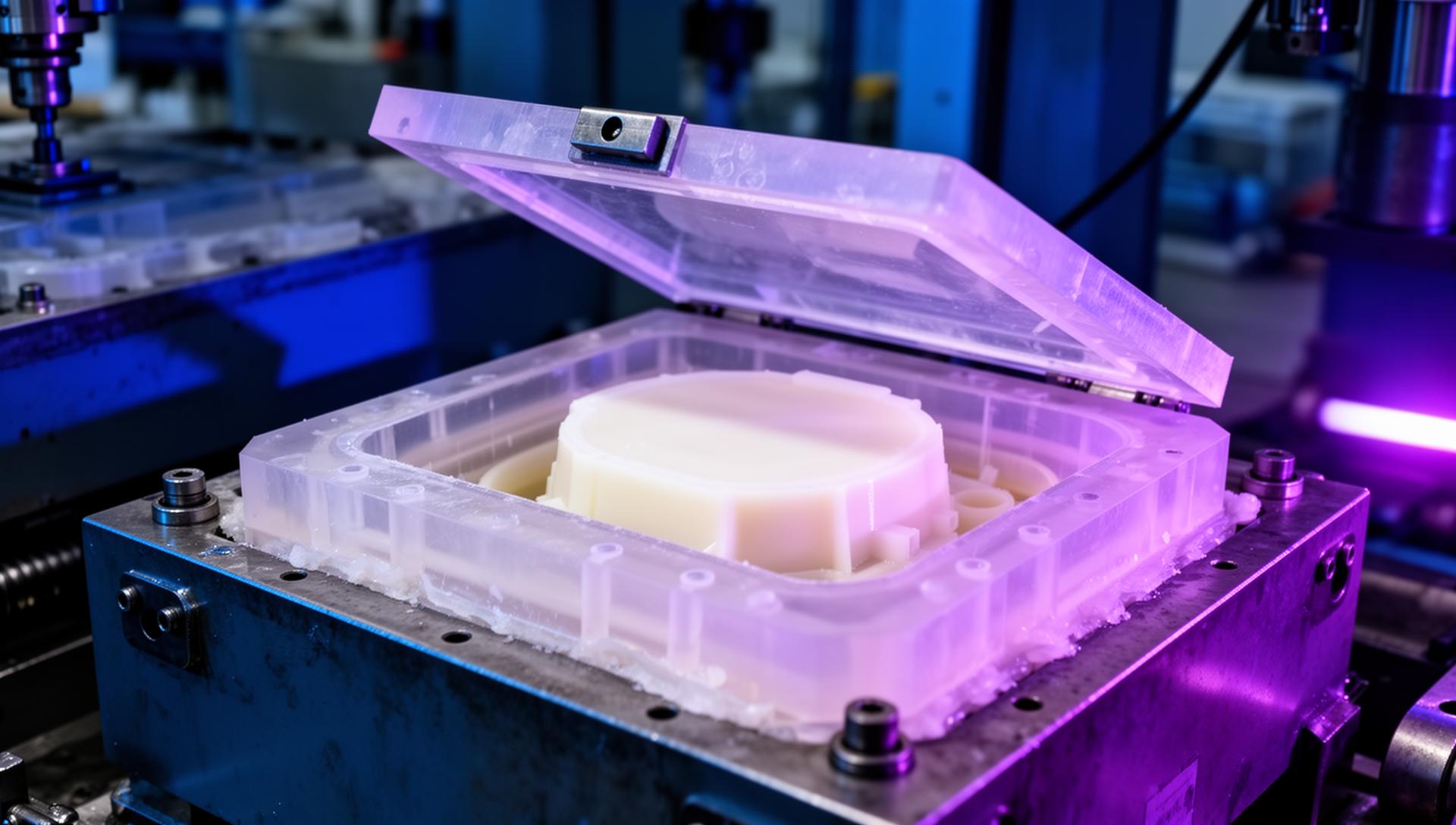
Vacuum Casting: The Solution for High-Quality Small Series Production
Bridge the gap between prototype and mass production with premium-quality parts at a fraction of the cost.
In Brief
Vacuum Casting is a manufacturing technology designed to produce short runs of high-quality plastic and rubber parts that closely replicate the properties of traditional injection molding. The process is based on creating a silicone mold around a Master Model, into which advanced polyurethanes are poured inside a vacuum chamber. The vacuum eliminates air bubbles and ensures the material fills every minute detail in the mold.
This technology is ideal for quantities of 10 to 50 units - a stage sometimes called the "Valley of Death" in manufacturing, where 3D printing is too expensive, slow, or lacks sufficient quality, and producing a steel mold is not economical. Vacuum casting enables entrepreneurs to present to investors, conduct market testing, and perform compliance testing with products that look, feel, and function like the final product, all at a fraction of the cost of injection molds.
You've reached the critical stage where your computer model needs to become reality, but you face a familiar dilemma: 3D printing doesn't deliver the finish and mechanical properties required for a final product, while opening a steel mold for plastic injection demands an investment of tens of thousands of dollars that's still too early to commit to. This is exactly where vacuum casting technology enters the picture. It's the missing link that allows entrepreneurs, engineers, and designers to produce small series of products with 'shelf-ready' finish quality, at costs significantly lower than mass production and at record speed.
The Gap Between Prototype and Mass Production
One of the greatest challenges in the product development process is the transition from idea and initial model to serial production. Many entrepreneurs find themselves needing a limited number of units - say 20 or 30 - for critical purposes: exhibition display, sending to Beta Testers, or conducting rigorous compliance testing. 3D printing, despite its tremendous advances in recent years, often leaves the entrepreneur with a product that feels 'raw'. The surface is rough, materials are too brittle or insufficiently heat-resistant, and the overall feel is that of a model, not a product.
On the other hand, an immediate transition to mass production requires enormous financial commitment. A simple steel mold can cost thousands of dollars, and complex molds easily reach tens of thousands. Such an investment before the product has undergone market validation is a risk that too often brings down promising ventures. Vacuum casting is the bridge that allows you to cross this gap safely, producing parts from materials that closely simulate final engineering plastics (such as ABS, PC, PP, and even rubber at various hardness levels) with premium-grade finish.
How Does the Technology Work? A Step-by-Step Process
The magic of vacuum casting lies in the combination of precise craftsmanship, advanced chemistry, and physics. The process consists of several key stages, each affecting the quality of the final product.
1. Creating the Master Model
Everything begins with one perfect model. To create the mold, we need a physical model that is an exact replica of the final product. This model is typically manufactured using high-resolution 3D printing technology (such as SLA) or CNC machining for maximum accuracy. This stage is critical because every detail, texture, or flaw in the master model will transfer to every unit produced from it. Therefore, the master model undergoes careful hand polishing, primer painting, and sometimes creation of special textures per the designer's requirements.
2. Creating the Silicone Mold
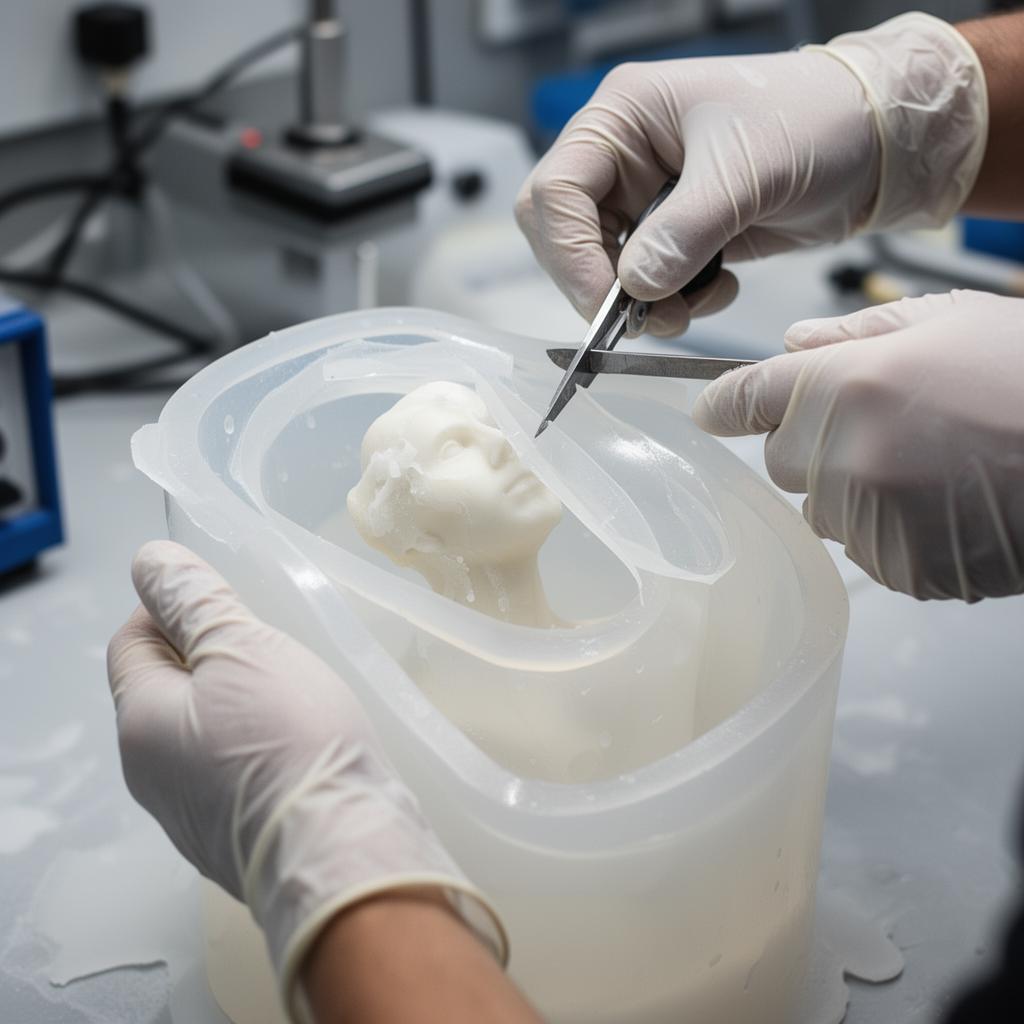
Once the master model is ready, it's positioned inside a box and liquid silicone is poured around it. The silicone is chosen for its flexibility, heat resistance, and ability to replicate details at the micron level. After pouring the silicone, the entire box enters a vacuum chamber to remove air bubbles that could damage the mold's surface. After the silicone solidifies into a solid yet flexible block, it's cut in a planned and precise pattern (parting line) and the master model is extracted. What remains is an empty cavity in the shape of the product.
3. Vacuum Polyurethane Casting
In this stage, the mold is closed again and connected to the casting machine. The raw materials - typically two-component polyurethanes (resin and hardener) - are mixed and poured into the mold inside a full vacuum chamber. The vacuum is critical because it eliminates air resistance and allows the viscous liquid to flow into every corner of the mold, including thin walls and delicate details, without creating trapped air bubbles. After casting, the mold is placed in an oven for final curing.
When You Don't Need a Steel Mold: The Economic Advantage
The question "When should you move to a steel mold?" is one of the most common questions we get at ATI. As a company specializing in prototype development and bringing products to production, we encounter entrepreneurs who want to 'rush' into mass production too early. A steel mold is an asset, but it's also a heavy anchor. Once you've created a steel mold, any product change becomes expensive and complicated, sometimes even impossible.
Vacuum casting is the perfect solution when:
- The required quantity is between 10 and 50 units - in this range, the per-unit cost of vacuum casting is higher than injection, but the absence of initial tooling investment makes the total project significantly cheaper.
- Specific material properties are required - when you can't compromise on strength, flexibility, transparency, or heat resistance, and 3D printing doesn't provide an adequate engineering solution.
- Timelines are tight - producing a steel mold takes 4 to 8 weeks (sometimes more). A vacuum casting series can be completed within 10-14 days from file receipt.
- Market feasibility testing - before committing to 5,000 units, you can produce 30 units, sell them or give to testers, and receive real feedback.
Materials and Properties: Not Just Any Plastic
One myth that needs to be shattered is that vacuum cast products are lower quality. In practice, the polyurethanes used in this industry are advanced engineering materials developed to simulate the properties of common commercial plastics. Available materials include:
- ABS: Rigid, durable plastic suitable for enclosures and structural parts.
- PP (Polypropylene): A more flexible material, resistant to breakage and chemicals (e.g., clip fasteners).
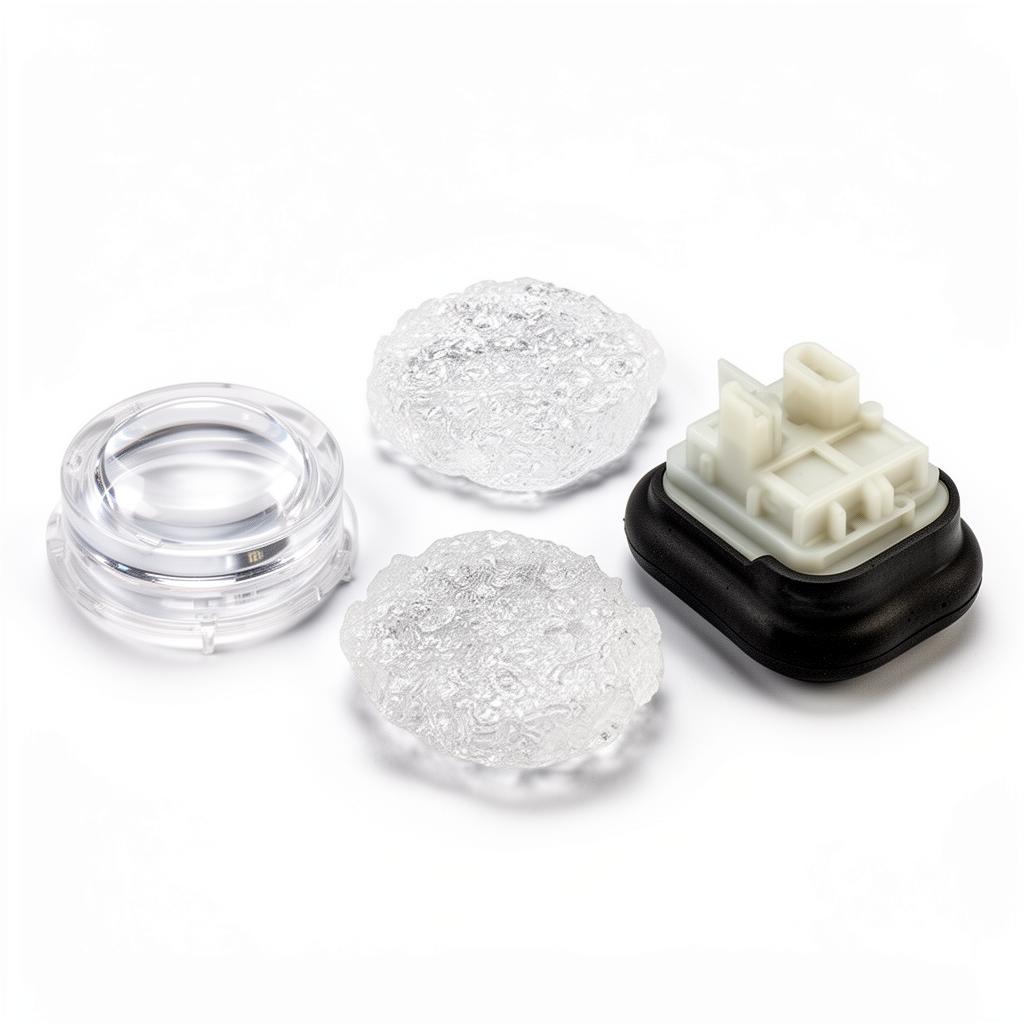
- PC (Polycarbonate): For creating fully transparent parts like lenses or display covers, with glass-level clarity.
- Rubber / Elastomers: Creating rubber at various hardness levels (Shore A), from very soft rubber to rigid rubber for seals or buttons.
Finishes and Details: The Look of a Premium Product
The silicone's ability to replicate details is phenomenal. If the master model has a leather texture, high gloss finish, or silk-matte finish, every cast unit will come out with exactly the same finish. Furthermore, this technology enables overmolding - casting rubber onto a rigid plastic or metal part. This is an essential feature for ergonomic products, grip handles, and medical devices, something nearly impossible to achieve with regular 3D printing.
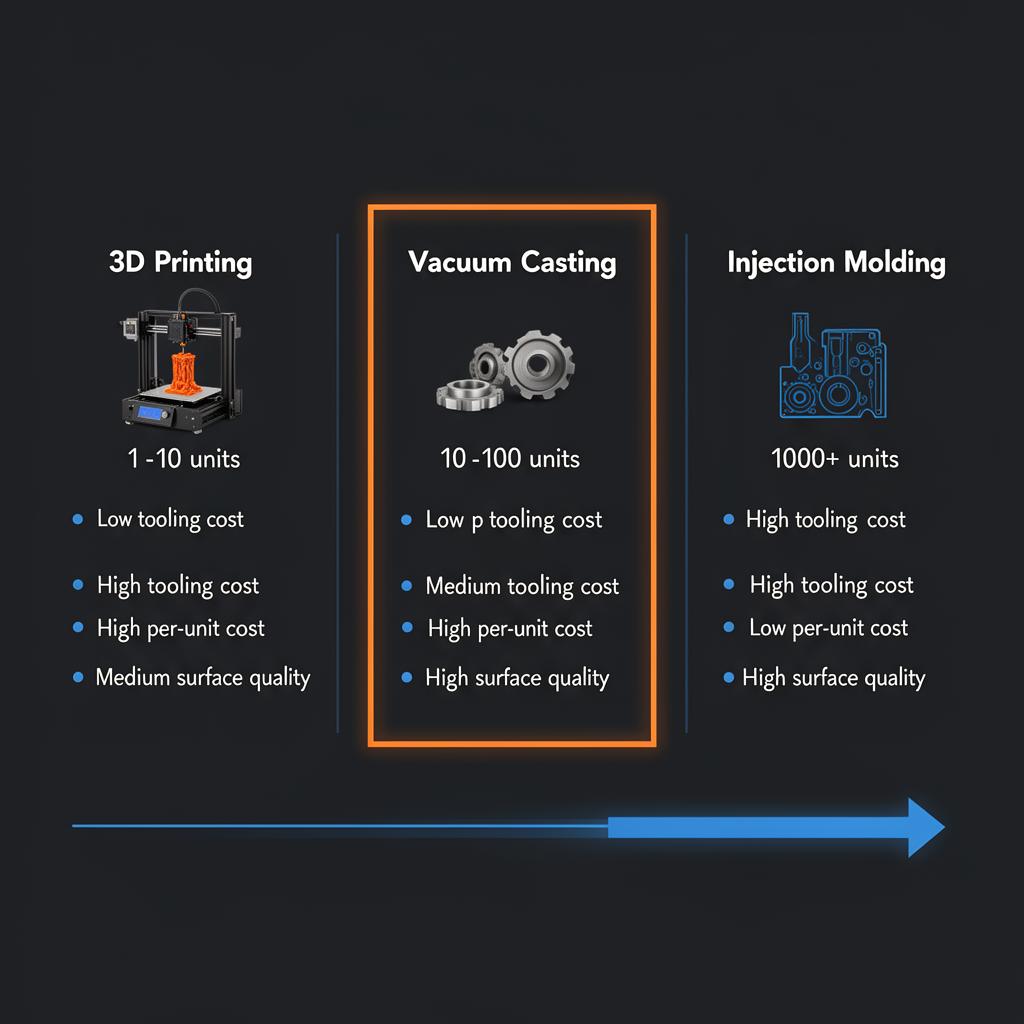
Choosing the Right Technology
| Parameter | 3D Printing (FDM/SLA) | Vacuum Casting | Injection Molding |
|---|---|---|---|
| Recommended Quantity | 1-10 units | 10-100 units | 1,000+ units |
| Tooling Cost | Very Low / None | Medium (master + silicone) | Very High (steel mold) |
| Per-Unit Cost | High | Medium | Very Low |
| Surface Quality | Medium (visible layers) | Very High (smooth/textured) | Very High |
| Material Properties | Limited | Wide range (engineering-grade) | Actual final material |
The ATI Propel Advantage
As a team that has been guiding entrepreneurs for over two decades, we at ATI view vacuum casting as a strategic tool, not just a technical one. A good product development company knows how to direct the entrepreneur to choose this technology only when it serves their business goals. Sometimes we'll recommend simple printing if the purpose is just form-factor feasibility testing, but when the entrepreneur needs to stand before an investor and say 'this is the product,' there is no substitute for vacuum casting quality.
In our workflow, we perform file analysis before production. We check wall thickness, draft angles, and optimal injection point locations to ensure parts come out perfect and without distortions. This is the difference between 'ordering a print' and a controlled engineering process.

Tip From the Experts
Never rush to produce a steel mold before you've sold or at least presented a physical product that looks and feels final to your target audience. Vacuum casting is the cheapest insurance policy that will save you from wasting your development budget on molds that need changes afterward.
Key Takeaways
Bridge the Gap
Vacuum casting fills the 10-100 unit range where 3D printing and injection molding fall short.
Premium Quality
Parts look, feel, and perform like injection-molded products at a fraction of the cost.
Risk Management
Validate your product with real-world testing before committing to expensive steel tooling.
Versatile Finishes
From crystal-clear transparency to leather textures and rubber overmolding.
Market Validation
Produce 30 shelf-ready units for beta testers and investors before scaling up.
Speed to Market
Complete series of 20 units in just 10-14 working days from file approval.
Frequently Asked Questions
How many parts can be produced from a single silicone mold?
The lifespan of a silicone mold is limited and depends heavily on part complexity, the type of material being cast (aggressive materials wear the mold faster), and geometry. On average, a quality silicone mold lasts for 15 to 25 castings. After that, the silicone begins to wear, accuracy decreases, and part surfaces may be affected. If larger quantities are needed, a new silicone mold is simply created from the same master model.
Are vacuum cast materials as strong as injection-molded ones?
The materials used for vacuum casting are polyurethanes specially developed to simulate the properties of thermoplastics (like ABS, PC, Nylon). For most functional uses - assembly testing, drop tests, and reasonable use - they provide excellent strength very similar to the original. However, in cases of extreme resistance to certain chemicals or very high temperatures over extended periods, there may be slight differences compared to the final injected material.
How long does it take to produce a series of 20 units?
The vacuum casting process is relatively fast. After receiving and approving the 3D files, producing and finishing the master model takes about 2-4 days. Casting the mold and waiting for solidification takes about 1-2 days. After that, the casting rate is approximately 2-4 parts per day per mold (depending on part size and curing time). In total, a typical project of 20 units can be completed and shipped within 10 to 14 working days.
Can transparent parts be created with vacuum casting?
Absolutely, and this is one of the technology's greatest strengths. Very high optical transparency can be achieved, simulating glass or polycarbonate (PC). To achieve this result, the master model must be polished to a perfect gloss level, and the casting is performed with a dedicated clear resin. The result is highly suitable for lighting lenses, screens, and transparent fluid containers.
What is the accuracy level (tolerances) in vacuum casting?
The accuracy level in vacuum casting is very high but is affected by several factors such as silicone shrinkage and the shrinkage of the casting material itself. Generally, accuracy of approximately +/-0.15% to +/-0.2% of the nominal dimension can be achieved. For most prototypes and small series, this accuracy is more than sufficient and allows precise assembly of moving parts and mechanisms.
Can parts be painted after production?
Yes. The raw material itself can be pigmented (pigments within the casting) to achieve a uniform base color resistant to scratches. Additionally, after casting, parts can undergo a finishing process including sanding and professional oven painting, silk printing of logos and labels, and even metallic coatings. This capability allows you to receive a product that looks completely identical to a final product from a mass production line.