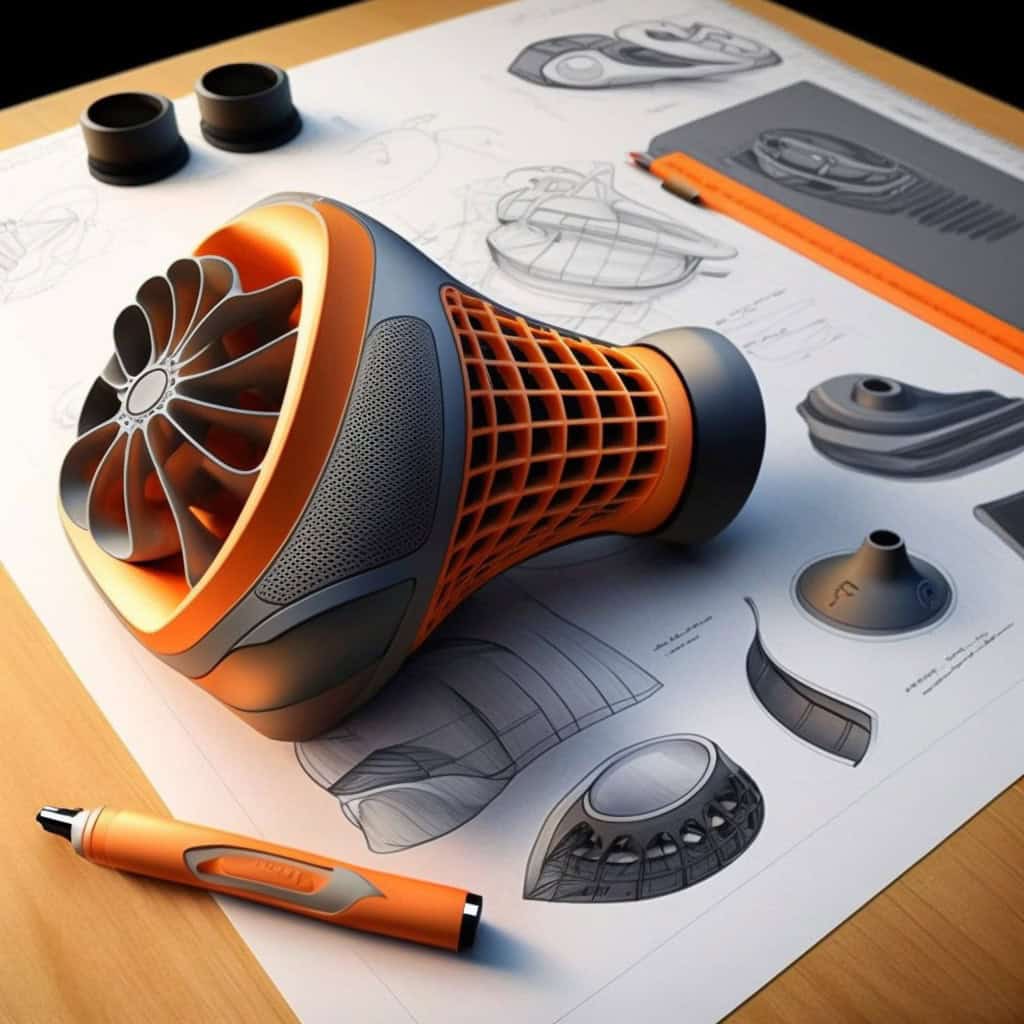
Why Product Design Matters in the Product Development Process
Design is not decoration - it's a strategic investment that determines your product's success.
In Brief
Industrial design is the bridge connecting cold engineering to the human user. It's not just about external appearance or color choices - it's about deeply planning how the product is used, its ergonomics, material selection, and adaptation for mass production. Quality product design directly impacts manufacturing costs, the end-user experience, and the product's ability to stand out in a competitive market.
During the development process, the industrial designer works closely with engineers to ensure the product doesn't just work, but is also comfortable to use, safe, and economical to manufacture. Ignoring this stage can lead to a product that's difficult to operate or too expensive to produce - resulting in commercial failure. That's why incorporating professional design is a strategic investment, not a cosmetic expense.
Have you ever wondered why some products become overnight hits, while others - with similar or even superior technology - vanish from the shelves? The secret often lies in the connection between the human and the machine. We live in an era where technology is accessible to many, but the ability to present it in a smart, aesthetic, and unique way is what makes the difference. This is where the critical importance of proper industrial design comes into play. As the founder of ATI, I've seen countless entrepreneurs invest heavily in technology development while neglecting the design envelope - a mistake that can prove costly during marketing and production.
The Fit Between Aesthetics and Functionality
Many tend to think that product design boils down to "making it look pretty." This is a fundamentally flawed perception. Professional product design is a complete process that integrates the aesthetic need with the functional requirements of the device. When we at ATI approach a new project, our first goal is to understand the product's usage environment.
A product can be the most beautiful in the world, but if the button is placed in an uncomfortable position, or the weight isn't balanced in the user's hand, it will fail. Industrial designers apply ergonomic principles to ensure the product feels like a natural extension of the human body. Moreover, the design influences the perceived quality of the entire brand.
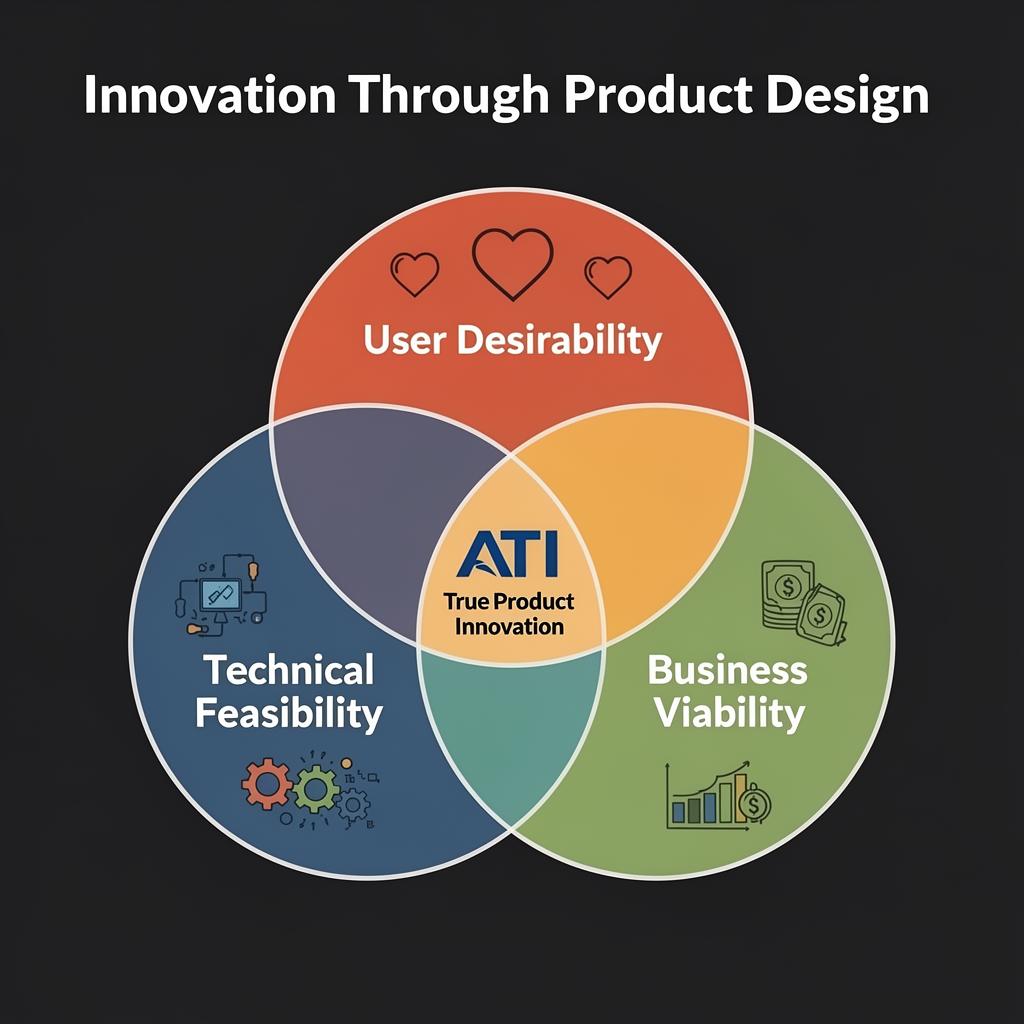
Differentiation in a Saturated Market: The Blue Ocean Strategy
One of the key reasons to invest in design is the ability to create differentiation. In markets defined as a "Red Ocean" (markets saturated with competition), products are technologically very similar to one another. Here, design is often the only factor that can make a consumer choose your product.
In contrast, products that succeed in creating a "Blue Ocean" - a new niche without direct competitors - often do so thanks to innovative design and a usage concept that has never been seen before. Value innovation created through design can change the rules of the game in an entire industry.
Design for Manufacturing (DFM)
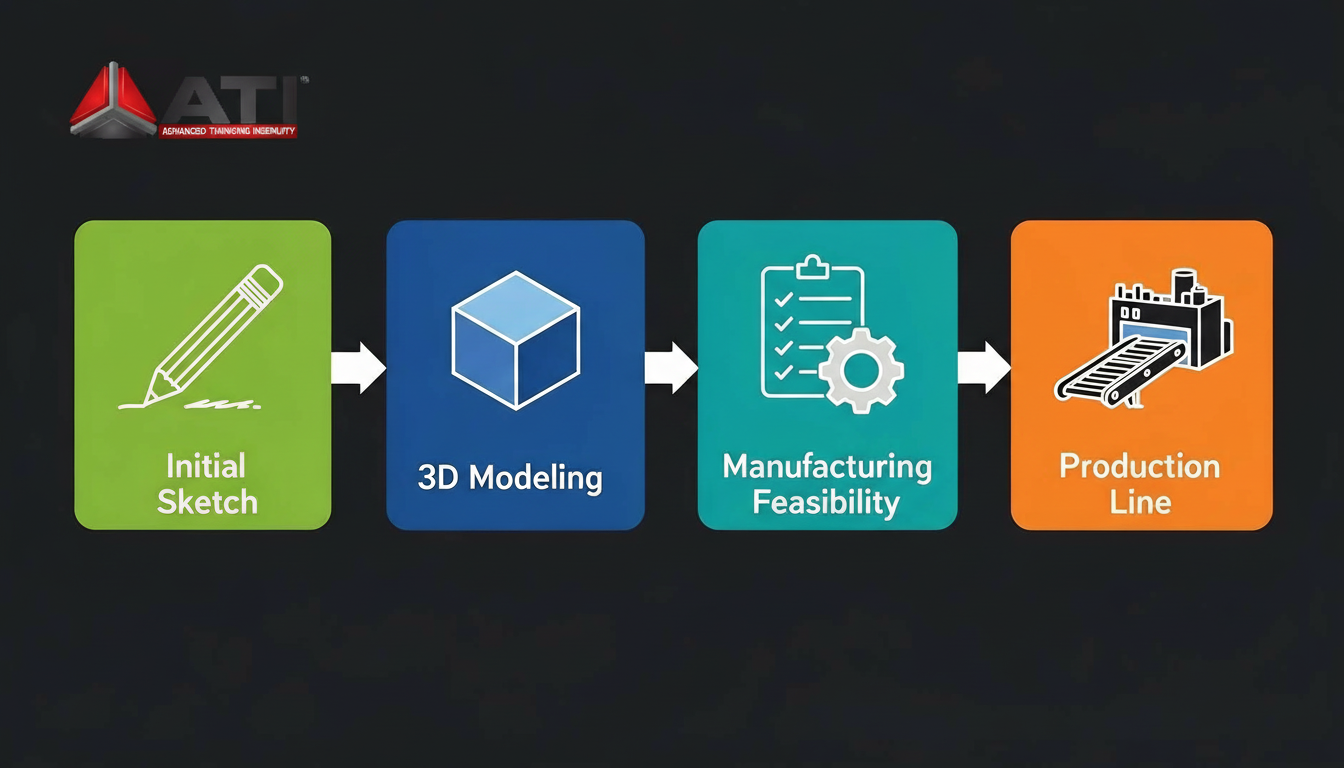
As a team that guides entrepreneurs from the idea stage to serial production, we see supreme importance in the concept of DFM - Design For Manufacturing. A skilled designer doesn't just draw stunning sketches but thinks about the production line. They ask themselves critical questions at the planning stage:
- Can this part be ejected from a plastic injection mold?
- How can we reduce material usage to save costs without compromising strength?
- Can the product be assembled with minimal human operations?
When product development is carried out without considering manufacturing, the result is typically a need for expensive changes and significant delays down the road. At ATI, our designers work in fit with engineers to prevent these situations from the outset.
User Experience (UX) in Physical Products
It's common to think about user experience in the context of apps and websites, but it's equally critical in physical products. The designer's role is to anticipate user behavior. Will the user intuitively understand how to operate the device? Is there feedback - in the form of light, sound, or tactile sensation - confirming the action was performed?
Research by the international consulting firm Nielsen Norman Group shows that investing in usability pays for itself many times over, as it reduces technical support needs and increases customer loyalty. During prototype development, we examine exactly these points by creating initial models that can be held and physically tested.
Good Design vs. Poor Design
| Parameter | Good Product Design | Poor Product Design |
|---|---|---|
| Usability | Intuitive, no complicated instructions needed | Frustrating, requires extensive learning |
| Manufacturing | Adapted to industrial molds and processes | Requires expensive adjustments and complex solutions |
| Aesthetics | Timeless, supports the brand | Too trendy, ages quickly |
| Sustainability | Smart material use, easy to disassemble and recycle | Wasteful, uses adhesives that prevent recycling |
The ATI Propel Process
At ATI Propel, we believe design is not a stage you can skip or "tack on" at the end. It's an integral part of every step along the way. Whether you need complex product planning or simple gadget development, our team ensures we bring in the best designers from Israel and around the world.
We start with a feasibility study to verify your idea holds water from a business and technology perspective, and continue with close guidance until you receive the finished product. Our goal is not just to manufacture a product, but to create success.

Tip From the Experts
Don't treat product design as a 'pretty wrapper' added at the end of the process. Involve the industrial designer from the very first brainstorming session. Design decisions made early on will save you tens of thousands of dollars in mold changes and delays in later production stages.
Key Takeaways
Aesthetics & Function
Great design balances beauty with usability - it's not one or the other.
Design for Manufacturing
DFM thinking from day one prevents costly changes and production delays.
User Experience
Physical UX is just as important as digital - intuitive interaction drives loyalty.
Blue Ocean Strategy
Innovative design can create entirely new market categories without competitors.
IP Protection
Registered designs provide legal protection for your product's unique appearance.
End-to-End Process
From feasibility study through prototyping to mass production - design is integral throughout.
Frequently Asked Questions
What's the difference between a product designer and a mechanical engineer?
While a mechanical engineer focuses on "how it works" - structural strength, internal mechanisms, component selection - a product designer focuses on "how it feels and looks." The designer is responsible for user interaction, ergonomics, aesthetics, and visual language. The combination of both is critical for a successful product.
Does product design increase development costs?
In the short term, it's an additional expense, but in the long run, professional product design saves significant money. Proper DFM reduces per-unit manufacturing costs through material and assembly time optimization. It also prevents design errors that are only discovered at later, more expensive stages.
When should you hire an industrial designer?
It's recommended to bring in an industrial designer as early as possible - ideally right after the initial concept and feasibility check. Involving a designer in the early stages allows you to properly define product characteristics and prevent engineering constraints from "killing" the user experience or product appearance.
Can product design be legally protected?
Yes, absolutely. You can register a "Design Patent" or "Registered Design" (varies by country) that protects the unique appearance, lines, and form of the product from imitation. It's a powerful legal tool that complements patent protection on the technology itself.
What does the product design process at ATI include?
The process at ATI includes market and competitor research, design concept development, hand sketches, 3D modeling (CAD), photorealistic renderings, and finally producing a product file for manufacturing. We work closely with engineers and manufacturers to ensure what was designed can actually be mass-produced.
Do you also provide prototyping services?
Yes, prototyping is a critical step in our process. We provide rapid prototyping services (3D printing, CNC, and more) to test the design, ergonomics, and functionality of the product before committing to expensive molds and serial production.